
Last updated November 25, 2026
 Sweep & inspection
 Caps & crowns
 Flue relining
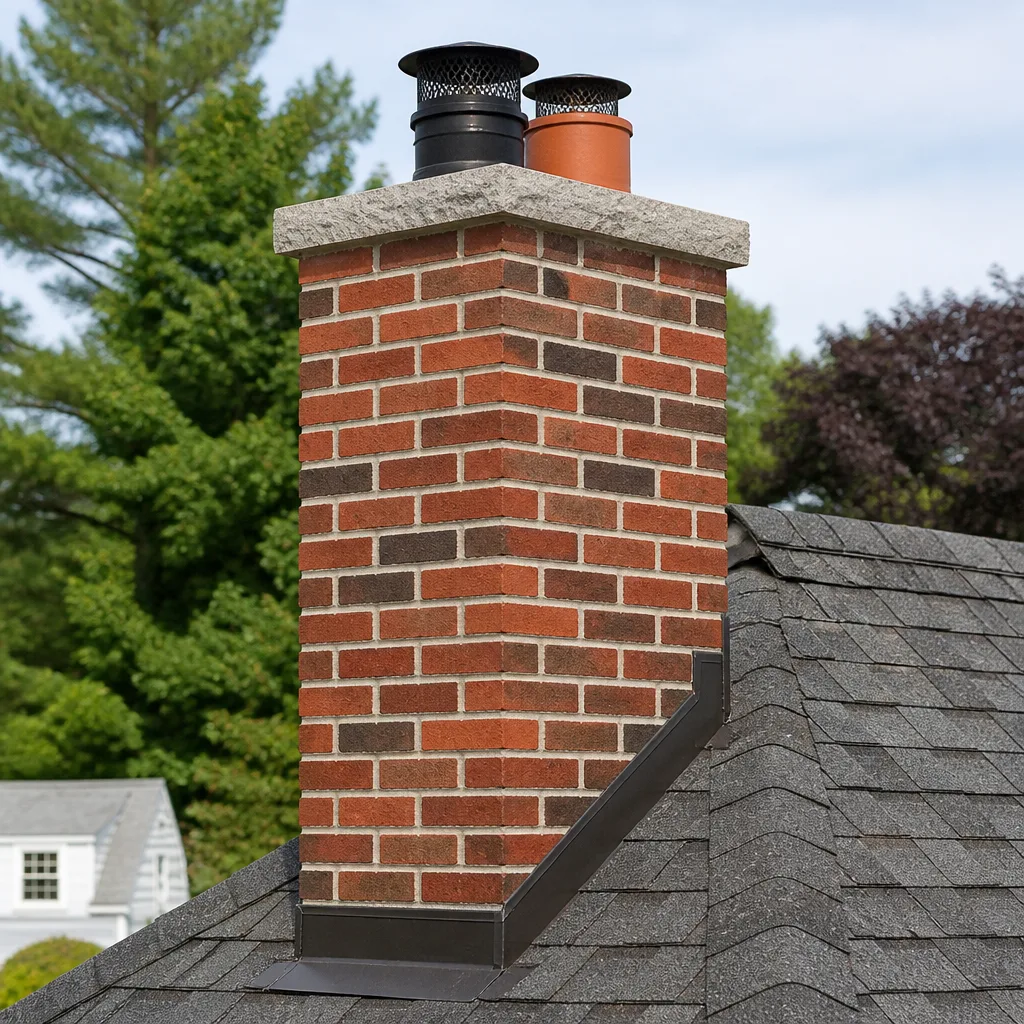 Masonry repair
 Gas fireplace service
Level 1 sweep and inspection to the NFPA 211 annual standard - flue, crown, cap, and flashing checked and photographed
Chimney sweep logs do not sweep chimneys. They loosen some creosote - which then falls where a brush and vacuum still have to collect it.
How to Hire a Chimney Cleaning Contractor in Redmond: A Step-by-Step Guide
Price is the wrong thing to shop for. In Western Washington, almost anyone can print a business card that says “chimney sweep,” and the low bid you see in Redmond often buys you a brush and a smile, not a diagnosis. The real risk isn’t overpaying by forty dollars. It’s hiring someone who cleans the flue but never looks at the crown, the liner joints, or the mortar at the smoke chamber, and then learning about the problem after it’s done damage. This guide walks you through the credentials, the interview questions, the red flags, and the contract details that separate a trained technician from a van with a broom. By the end, you’ll know exactly how to vet a Redmond chimney contractor like someone who’s done it before.
Quick Answer
To hire a chimney cleaning contractor in Redmond, verify current CSIA certification through the Chimney Safety Institute of America’s public directory, confirm the company carries liability insurance and can produce a written inspection report with photos, and ask directly whether they inspect the full system or only sweep the flue. The credential matters more than the price because a sweep-only operator can miss structural defects that a trained technician would catch. Get a written estimate before work begins and never accept a phone quote as final.
Styles & brands we work with
- Sweep & inspection
- Caps & crowns
- Flue relining
- Masonry repair
- Gas fireplace service
Table of Contents
- Why Credentials Matter More Than Price in Redmond
- What CSIA, NFI, and NCSG Credentials Actually Mean
- How to Verify a Contractor in Under Two Minutes
- Five Interview Questions That Reveal How They Work
- Red Flags Specific to Low-Price Chimney Offers
- What a Legitimate Service Agreement Should Include
- How to Compare Quotes When Line Items Don’t Match
- What to Expect on Sweep Day in Redmond
Why Credentials Matter More Than Price in Redmond
Chimney sweeping is one of the few trades in Washington where the barrier to entry is essentially a business license and some equipment. That’s not a knock on the trade; it’s a description of the regulatory reality. There’s no state-issued chimney sweep license you can check against a database, and no journeyman card that proves a person was trained to read a flue. The credential that does carry weight is CSIA certification, and the reason it matters is simple: it’s a test of whether someone understands the whole system, not just how to push a brush through a pipe.
What most homeowners picture when they hire a sweep is a cleaning. What a qualified technician actually does is an inspection with a cleaning attached. Those are two very different jobs. A cleaning removes creosote from the flue. An inspection evaluates the liner, the crown, the cap, the mortar joints, the smoke chamber, the firebox, and the damper, and then documents what it finds. In Redmond’s mix of older wood-burning homes and newer construction with inserts, both matter. A house built decades ago may have a clay tile liner with cracks invisible from the ground. A newer home with a factory-built fireplace may have a liner that’s been compromised by years of hot fires.
The industry difference shows up in what a company can do once it finds a problem. Many sweep-only outfits stop at cleaning and hand you a business card for someone else. Others handle the whole lifecycle. At Redmond Chimney Sweep, we work with professional-grade product lines including DuraFlex, HeatShield, Gelco, Olympia Chimney, Famco, and Copperfield, which means we can move from “here’s what we found” to “here’s the repair” without sending you shopping for a second contractor. From cap to firebox, every part of your chimney is handled.
None of that means you should hire us specifically. It means you should hire for capability, not just price. A clean chimney is the starting point. A safe, structurally sound chimney is the goal.
What CSIA, NFI, and NCSG Credentials Actually Mean
The chimney industry has a few acronyms that get thrown around in advertising, and they don’t all mean the same thing. Here’s what each one actually represents, in plain language.
CSIA (Chimney Safety Institute of America) is the most widely recognized credential in the trade. CSIA Certified Chimney Sweeps pass a written exam and commit to continuing education. The certification is not permanent; it requires renewal, which means a current CSIA listing reflects current knowledge. Companies that hold it can legitimately say their technicians are certified. That matters because the exam covers inspection standards, venting, and safety, not just cleaning technique. Many companies market themselves as “certified” without saying certified by whom – ask.
NFI (National Fireplace Institute) certification focuses on hearth appliances specifically: wood stoves, gas fireplaces, and pellet appliances. An NFI-certified technician has been tested on installation and venting of those appliances. If your home has a gas insert or a wood stove rather than an open masonry fireplace, an NFI certification is a meaningful signal because it shows training specific to your equipment. It’s not a substitute for CSIA, and the two are often held together.
NCSG (National Chimney Sweep Guild) membership is a trade association affiliation rather than a certification. Membership means the company has joined the guild and committed to its code of ethics. It’s a positive signal, but it isn’t a test. A company with NCSG membership but no CSIA certification is still worth asking about their training.
To put it simply: CSIA is the credential that proves training, NFI proves appliance-specific training, and NCSG shows professional affiliation. A company that holds CSIA certification and uses trusted product lines is in a different category from one that doesn’t.
How to Verify a Contractor in Under Two Minutes
You can check most of what matters before you ever pick up the phone. This isn’t about catching anyone in a lie; it’s about giving yourself the information you need to compare fairly.
- Look up the CSIA directory. The Chimney Safety Institute of America maintains a public listing of certified sweeps. Search the company name and your area. A current listing should show up immediately.
- Ask for the CSIA certificate number and the name of the certified technician. Certification is held by individuals, not always by the company. A company can advertise “CSIA certified” because one employee holds it. That’s legitimate, but you want to know who’s actually doing the inspection.
- Confirm liability insurance. Ask for a certificate of insurance. A legitimate chimney contractor carries general liability coverage, and the certificate should name the policyholder clearly. If a company hesitates to provide this, that’s a signal.
- Check their inspection reporting process. Ask whether they provide a written report with photos. A contractor who inspects the system will have a process for documenting findings. One who just cleans may not.
- Look for product-line relationships. Companies that stock or install recognized brands like HeatShield, Gelco, or Olympia Chimney have supply chains aligned with certified-trade standards, which tends to indicate they’ve built repair capability, not just cleaning equipment.
Two of these checks – the CSIA directory and the insurance request – take less than two minutes combined and tell you more than any review site. Do them before you schedule anything in Redmond, and you’ll start the conversation from a much stronger position.
Five Interview Questions That Reveal How They Work
What you’re trying to find out isn’t whether the technician is nice. It’s whether they inspect, or just clean. These five questions are designed to surface the difference. Ask them on the phone before you book.
- “Do you inspect the full system, or do you clean the flue only?” The right answer describes an inspection that covers the crown, cap, liner, firebox, damper, and smoke chamber. If the answer is “we clean the flue,” you’ve learned everything you need to know.
- “What does your inspection report look like?” A contractor who inspects will describe photos, a written summary, and possibly a rating of the condition. Someone who just cleans may say “we tell you what we see” – which isn’t a report.
- “If you find a crack or a damaged crown, what do you do?” Listen for whether they repair it themselves or refer out. A company that handles the whole scope – including fireplace repair and structural work – can give you one plan and one point of contact. One that refers out is telling you their scope ends at the flue.
- “How do you handle a chimney that needs a liner?” A trained answer will mention the system type, the appliance it serves, and the options. A vague answer suggests they don’t do liners. If they mention HeatShield specifically, that’s a sign of capability beyond simple relining, since it’s a specialist resurfacing system not available to general handymen.
- “Can you show me photos of the inside of my flue after the sweep?” A camera inspection and a photo report are the difference between trusting what you’re told and seeing it yourself. If a company can’t produce visual evidence, you’re being asked to take their word on a structural safety issue.
Write the answers down. When you compare quotes later, the company that answered all five with specifics is usually the one worth the higher bid, because you’re paying for a diagnosis as well as a cleaning.
Red Flags Specific to Low-Price Chimney Offers
A cheap sweep isn’t automatically a bad one. But in the Redmond and Eastside market, low headline prices are often a door-opener for a different business model: get in the door cheaply, then find something expensive to fix. Here’s how to tell the difference between a fair price and a bait-and-switch.
- The coupon that grows. A round of coupon prices that ends in a bill three or four times higher after “discovering” a problem is the classic pattern. The problem may even be real, but the decision is being forced on the spot, without time to think or compare.
- “Free inspection” with immediate upsell pressure. A free inspection isn’t inherently bad. A free inspection that ends with a same-visit demand for a large repair is a red flag. A real technician will show you the photo evidence and let you schedule the work when you’re ready.
- No written report. If the company can’t or won’t provide a written inspection report, you have no record of what was found and no way to verify it. This is one of the clearest signs of a cleaning-only service.
- Cash-only, no license or insurance on request. A legitimate contractor carries liability coverage and can produce a certificate. Hesitation here is a problem.
- High-pressure language about immediate danger. Real chimney problems can be serious, but a professional presents findings calmly and gives you time. If the sales pitch is built on fear without evidence, slow down.
- No product-line relationships for repair. A company that can’t name which systems they install for repair work may be planning to hand you a referral after the sweep. Ask what they use.
We’ve seen this pattern across Redmond homes, and the answer isn’t to distrust every low price. It’s to ask the five questions, ask for the report, and make the decision on your own schedule. A legitimate company will be fine with that.
What a Legitimate Service Agreement Should Include
Whether the work is a routine chimney sweep or a larger repair, the agreement should be in writing, and it should contain the following. Compare bids on these elements, not just the bottom line.
- Scope of work, written out. Exactly what’s covered: sweep, inspection, cap, crown, liner, or some combination. Vague scopes leave room for extra charges.
- Written estimate before work starts. The number on the estimate is the number you should expect. The estimate sets the price per job, and it should be in writing.
- Photo documentation of findings. The report should show what was found, not just describe it. Photos of the flue, the crown, the cap, and the firebox should be included.
- Liability insurance confirmation. The certificate should be current and clearly identify the insured company. Ask for it before the work begins.
- Warranty terms for repair work, if applicable. If the work involves a liner, cap, crown, or resurfacing, ask what’s covered and for how long. This should be in writing, not verbal.
- Clear line items. Each service and each material should be listed separately so you can compare quotes accurately.
A written agreement protects both sides. In a market where many companies operate without formal paperwork, insisting on a written scope, an estimate, and insurance documentation is one of the strongest steps you can take.
How to Compare Quotes When Line Items Don’t Match
Two quotes for “chimney cleaning” can look wildly different when one includes an inspection and one doesn’t. That’s not dishonesty; it’s a scope difference. The trick is to normalize the bids before comparing the number.
- Break each quote into the same categories. Sweep, inspection, cap, crown, liner, and any repair line items should each be listed. If a quote doesn’t break them out, call and ask for them to be broken out.
- Check whether inspection is included. A quote that includes a full inspection with a photo report is a different product from a quote that only covers sweeping. Compare like with like.
- Look at what products are named. If a quote includes a repair or a liner, ask which system is being used. A quote that names HeatShield, Gelco, or Olympia Chimney describes a specific standard. A quote that doesn’t name anything leaves you guessing.
- Factor in the warranty. A repair with a written warranty and one without are not the same. Ask what’s covered and for how long.
- Ask what happens if more is found. A quote should say what the process is if the inspection turns up a bigger problem. You want to know the price for that scenario before you commit.
The lowest number is rarely the best value in this trade. A sweep that includes a full diagnostic inspection and a written photo report is worth more than a flue cleaning with no report, even at a higher price. And an inspection that catches a cracked crown or a failing cap can save you far more than the difference in cost.
What to Expect on Sweep Day in Redmond
A typical sweep appointment in Redmond follows a predictable pattern. Knowing the sequence helps you ask better questions and spot shortcuts.
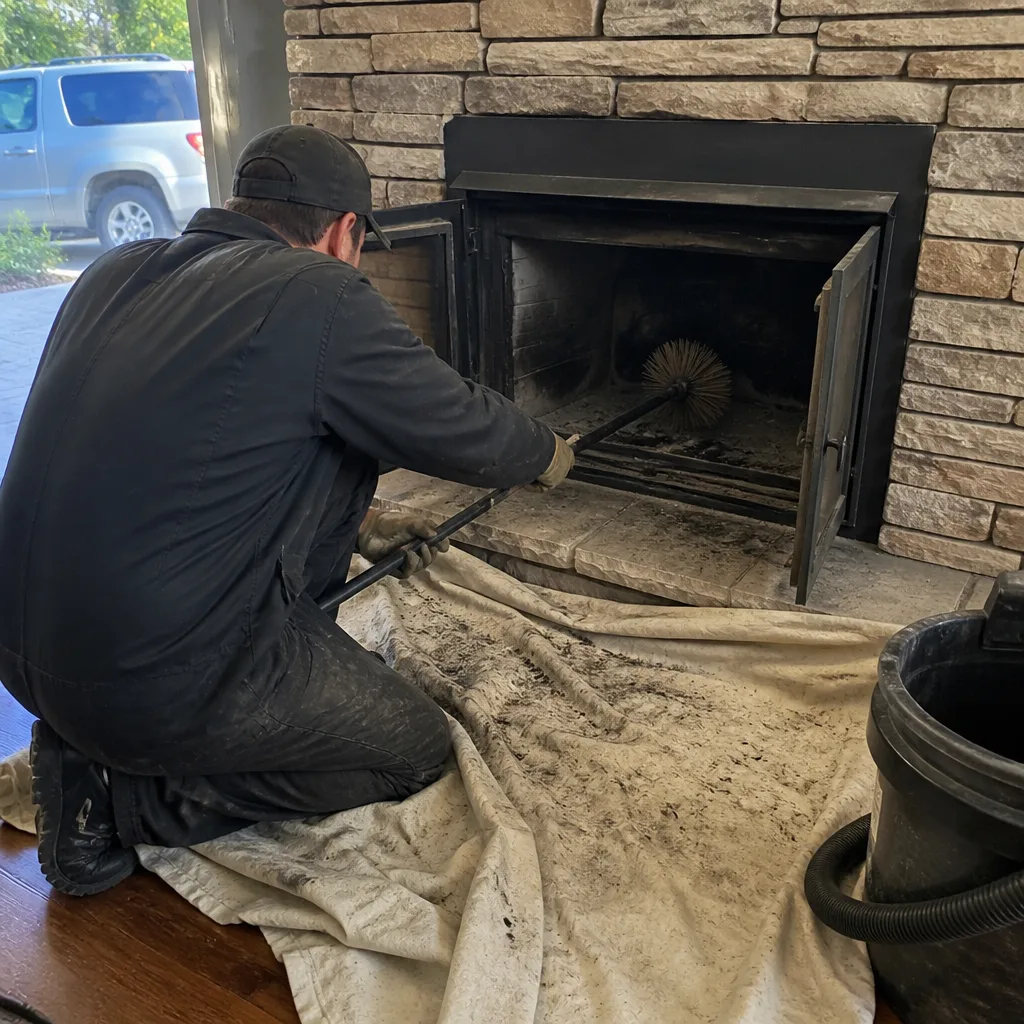
First comes the setup: drop cloths, a vacuum system, and protection for the floor and hearth. Then the sweep itself, using brushes sized to the flue. After that comes the inspection. This is where the difference between a cleaning and a diagnosis lives. A proper inspection checks the flue from top to bottom, looks at the crown and cap for water damage, examines the firebox and smoke chamber, evaluates the damper, and documents everything with photos.
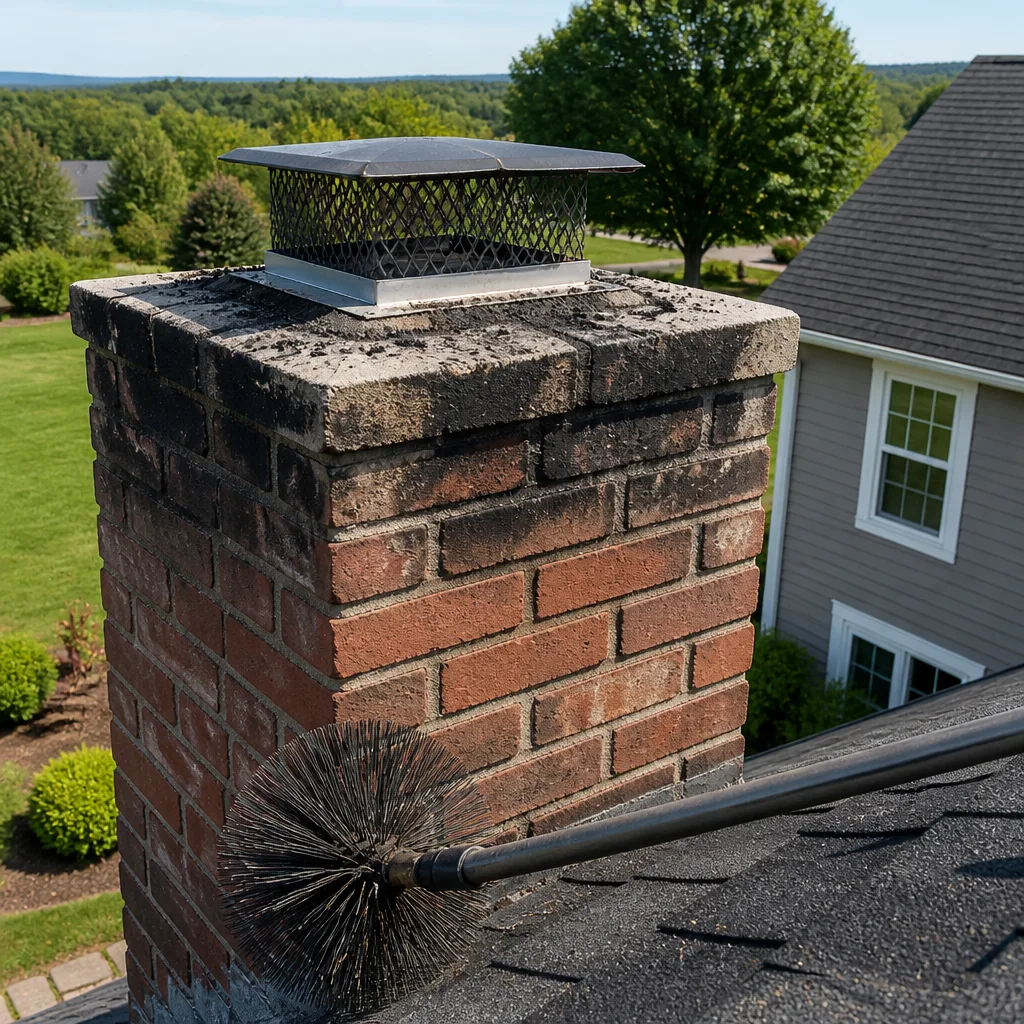
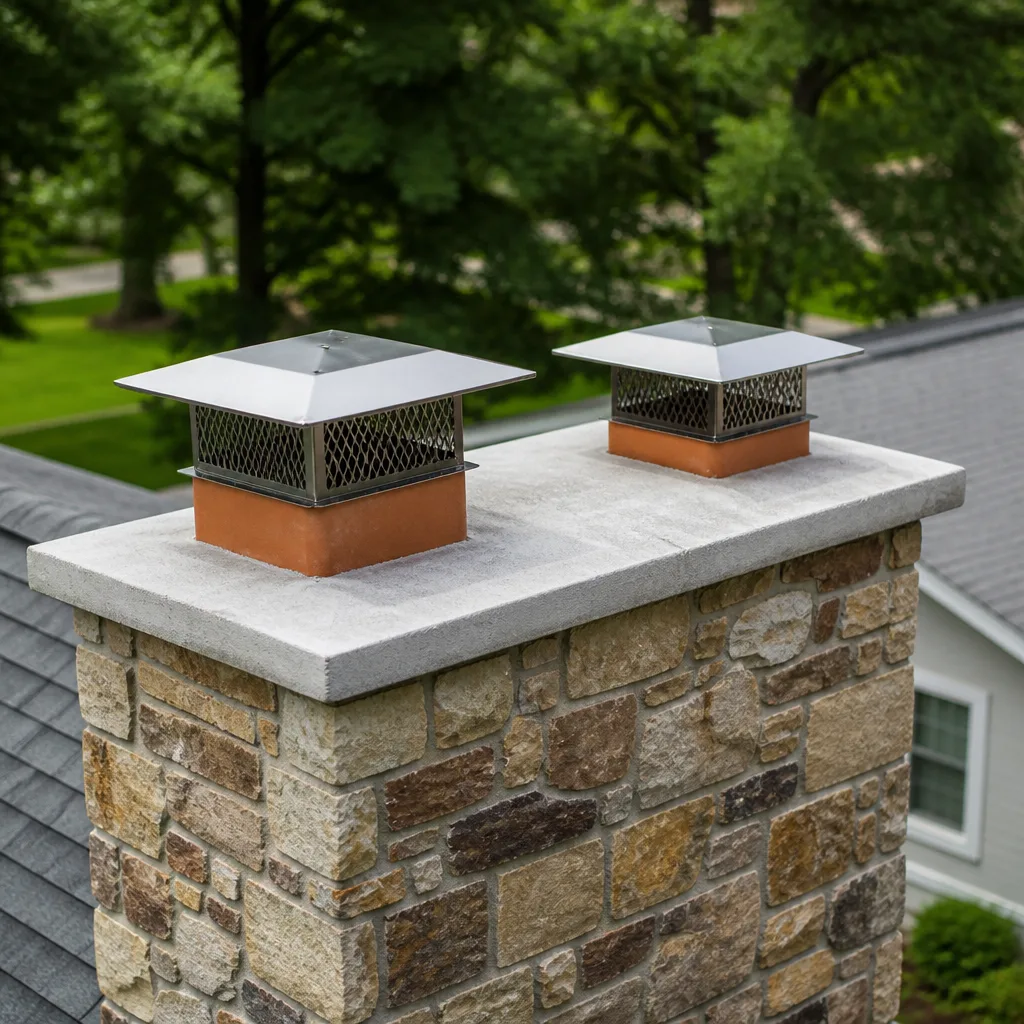
Redmond’s rainy months make water intrusion a frequent finding. A cracked crown or a missing cap lets rain into the flue, and years of that moisture can break down mortar and crack tiles. That’s why chimney cap & crown services matter as a preventive step. Catching a cracked crown early is straightforward. Catching it after the masonry has soaked for a few seasons is a bigger job.
At the end, you should get a written report, a clear explanation of what was found, and an estimate for any recommended work. You should also be told plainly when work can safely wait. Not everything needs to be done immediately, and a good contractor will tell you the difference between “this should be scheduled soon” and “this can wait until spring.”
Our technicians have up to 12 years of experience, and we work with product lines like DuraFlex, HeatShield, Gelco, Olympia Chimney, Famco, and Copperfield so that repairs can be handled in the same scope of work as the inspection. One company for the entire chimney system: sweep, inspect, repair, restore. That’s the model worth looking for, whether you hire us or someone else in Redmond.
Common Mistakes to Avoid
- Hiring the lowest bid without checking certification. A low price with no CSIA credential and no inspection report is not a deal. It’s a cleaning with no safety evaluation attached.
- Accepting a phone quote as final. A phone quote is a guess. The written estimate, given after the inspection, is the price. Anything quoted over the phone should be treated as an estimate, not a commitment.
- Skipping the inspection because you only wanted a cleaning. The inspection is what catches cracked crowns, damaged caps, and liner problems that a brush can’t fix. Skipping it saves a little money and misses the whole point.
- Not asking for the report. A written report with photos is your record of the chimney’s condition. Without it, you have no way to track changes year to year or verify what you were told.
- Hiring a sweep-only company for a repair. Cleaning and repair are different capabilities. If the inspection finds a liner problem, a sweep-only operator will refer you out, which means starting the vetting process over again.
- Ignoring water intrusion signs. In Redmond, rain is constant. Stains on the firebox, rust on the damper, crumbling mortar around the crown – these are water problems, and they get worse every season you ignore them.
- Letting a coupon dictate the scope. A coupon is a starting point, not a diagnosis. If the work recommended is based on a coupon conversation rather than a stated inspection finding with photos, ask for the evidence.
See the difference
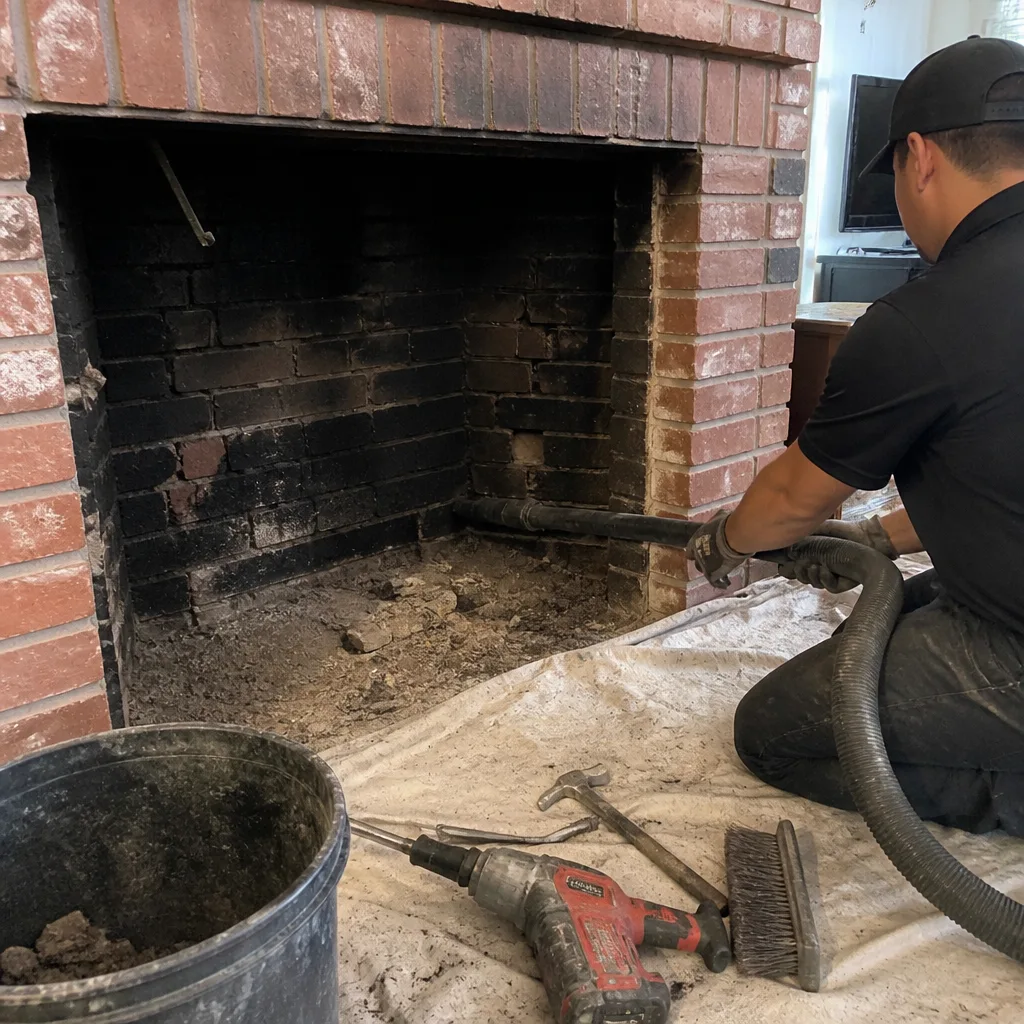 Before
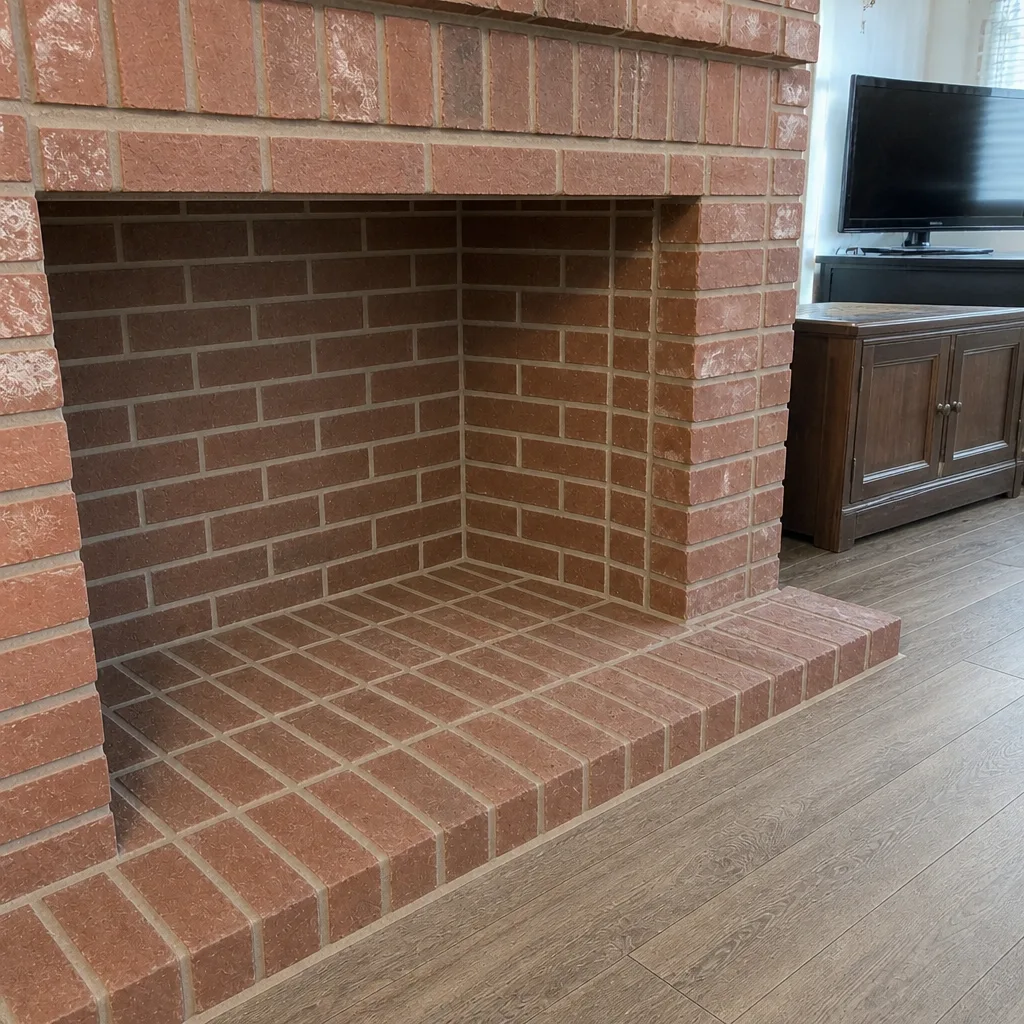 After
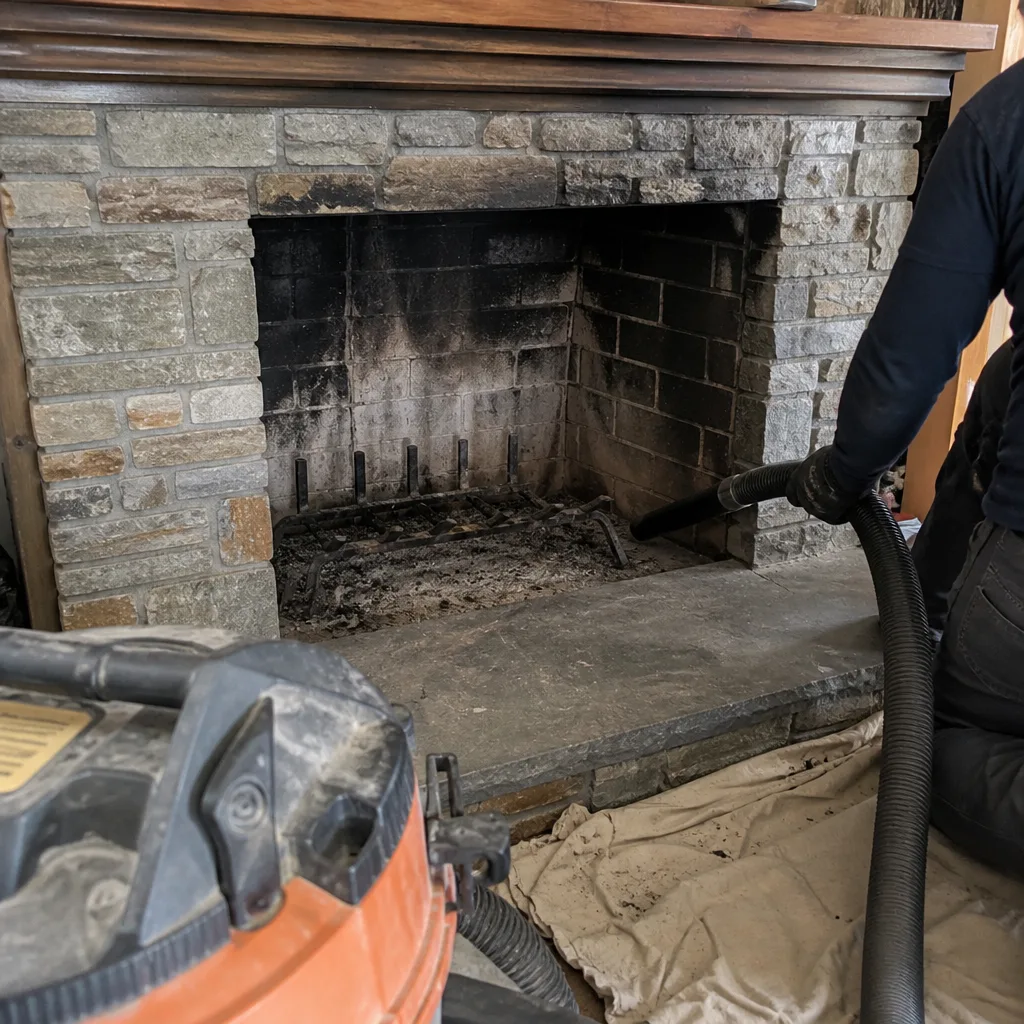 Before
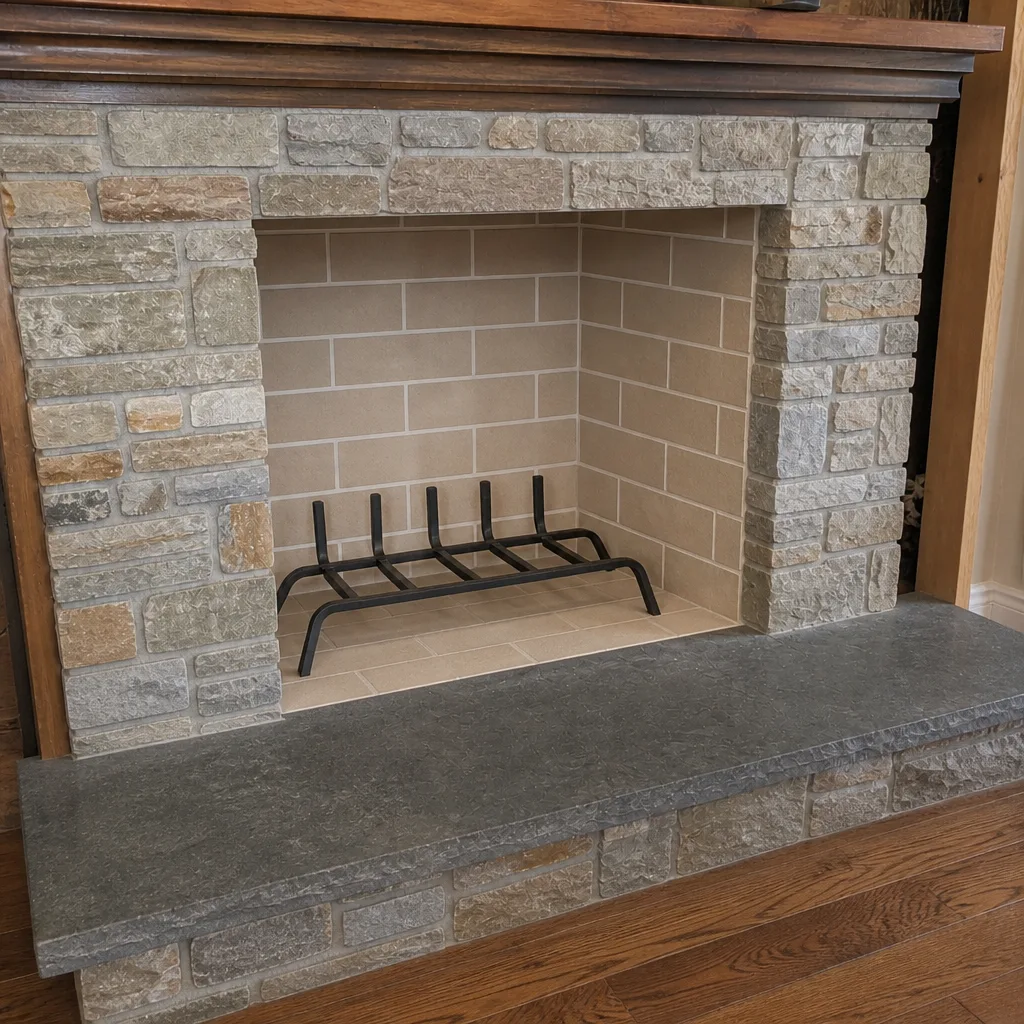 After
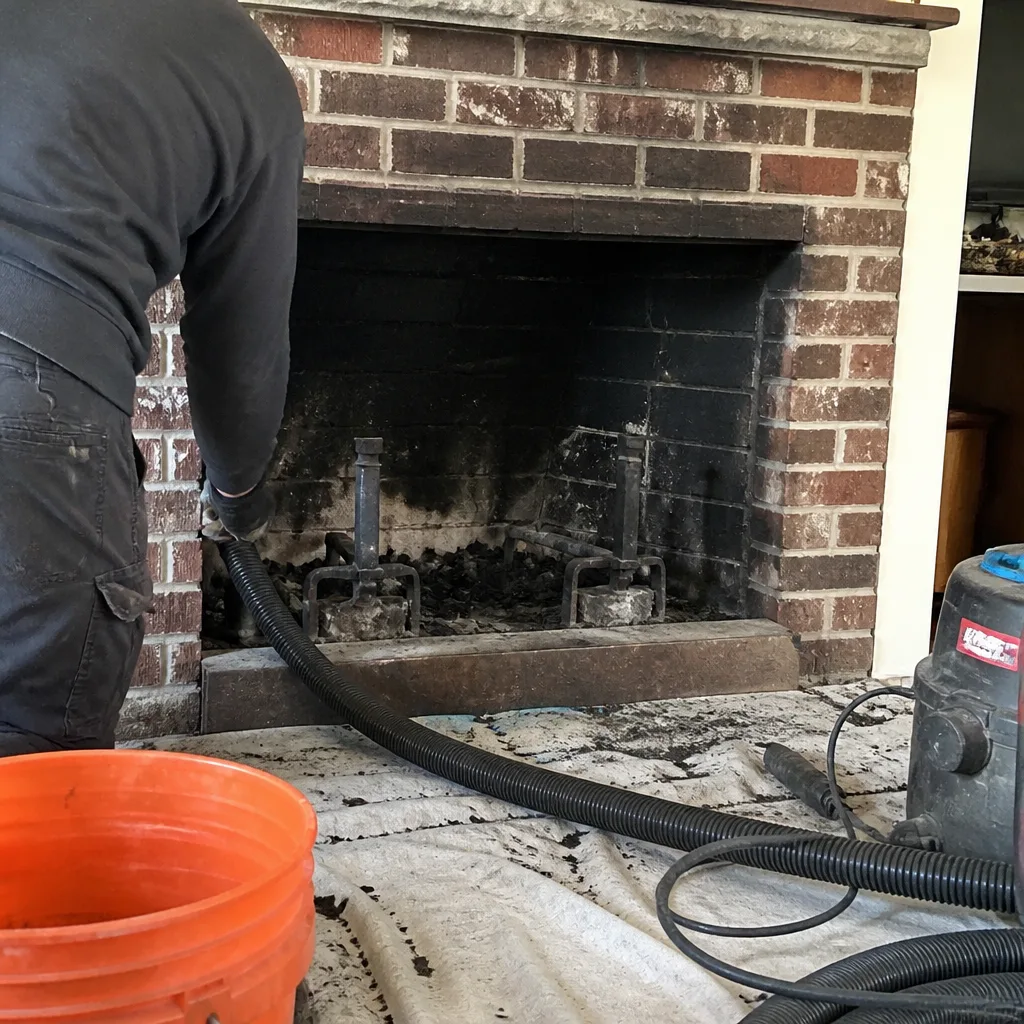 Before
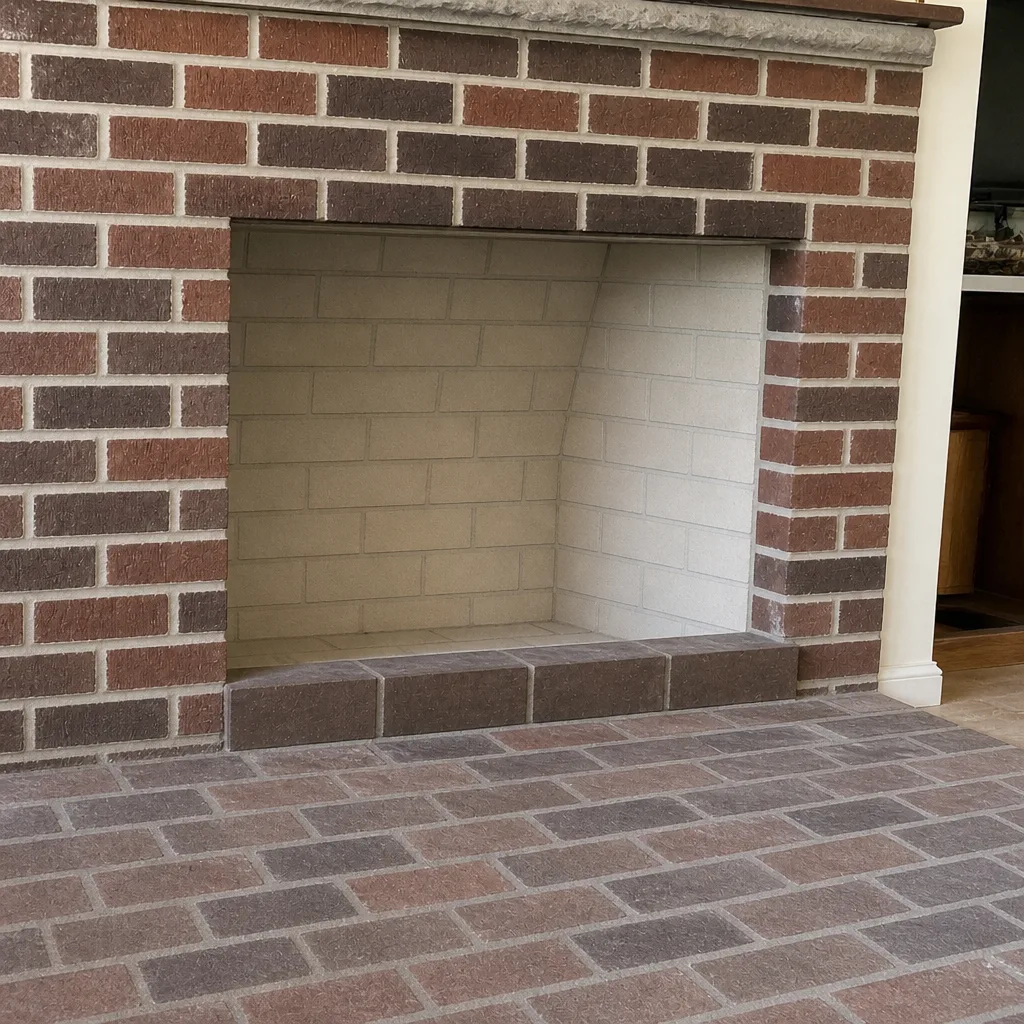 After
When to Call a Professional
Some chimney problems announce themselves loudly – a strong smell of creosote, smoke backing into the room, visible cracks in the firebox. Others are silent. A cracked crown, a compromised liner, or a damaged cap can sit unnoticed until it causes real damage. Call a professional if you’ve never had the chimney inspected, if it’s been more than a year since the last sweep during regular fireplace use, if you’ve noticed staining, rust, or crumbling mortar, or if you’re buying a home with a fireplace and don’t know its history.
It’s also worth calling if you’ve had a chimney fire, even a small one you think put itself out. The heat can damage a liner without any visible sign from the outside. A Redmond Chimney Sweep inspection with photos will tell you exactly what happened and what needs attention.
Redmond Chimney Sweep offers free estimates in Redmond – call (877) 492-1807. We answer 24/7. Fast dispatch from 7am to 7pm, Sunday through Friday.
Frequently Asked Questions
A typical sweep in Redmond is priced per job by written estimate after the inspection, and the estimate is free. The cost depends on the chimney type, the level of creosote, and whether a repair is needed. Call (877) 492-1807 for an exact quote – estimates are free.
CSIA certification is the credential that shows a technician passed an exam covering inspection and venting, not just cleaning. Any company can legally advertise chimney cleaning in Washington, so certification is the best available signal of training. Verify it through the CSIA directory before booking.
Once a year is the standard recommendation for homes that burn wood regularly, and an annual inspection is worth doing even if you burn less often. Redmond’s wet climate makes annual checks for water damage to the crown and cap especially valuable. Call (877) 492-1807 to book an inspection.
Only if there’s evidence the current liner is damaged, and you should be shown that evidence. A good contractor will provide photos of cracks, gaps, or deterioration before recommending a liner, and HeatShield resurfacing is an option when the liner can be restored rather than fully replaced. Call (877) 492-1807 for an exact quote – estimates are free.
Creosote builds up in the flue, and in a wood-burning fireplace, enough of it can ignite. A cracked crown lets water in, which damages mortar and tiles over time. Skipping the inspection means those problems go uncaught until they’re more expensive to fix. Call (877) 492-1807 to schedule an inspection before the burning season.
A coupon usually covers a basic flue cleaning, not a full inspection with a written photo report. The difference in price reflects a difference in scope, not a markup. Ask for line items and compare scopes. Call (877) 492-1807 for a written estimate.
The Bottom Line
Hiring a chimney contractor in Redmond comes down to verifying three things: CSIA certification, written inspection reporting with photos, and liability insurance. The price matters, but only after you know what’s included. A sweep-only operator can clean your flue and miss a cracked crown or a failing liner, which is exactly the kind of problem that shows up later as structural damage or worse. The five interview questions and the two-minute verification steps in this guide give you a way to separate diagnostic capability from a broom in a van. A clean chimney is the starting point. A safe, structurally sound chimney is the goal.
Call (877) 492-1807 for a free estimate. We answer 24/7. Fast dispatch from 7am to 7pm, Sunday through Friday, and we can walk you through the inspection findings with photos you can see for yourself before deciding on any repair.
Written by the team at Redmond Chimney Sweep.