
Last updated November 25, 2026
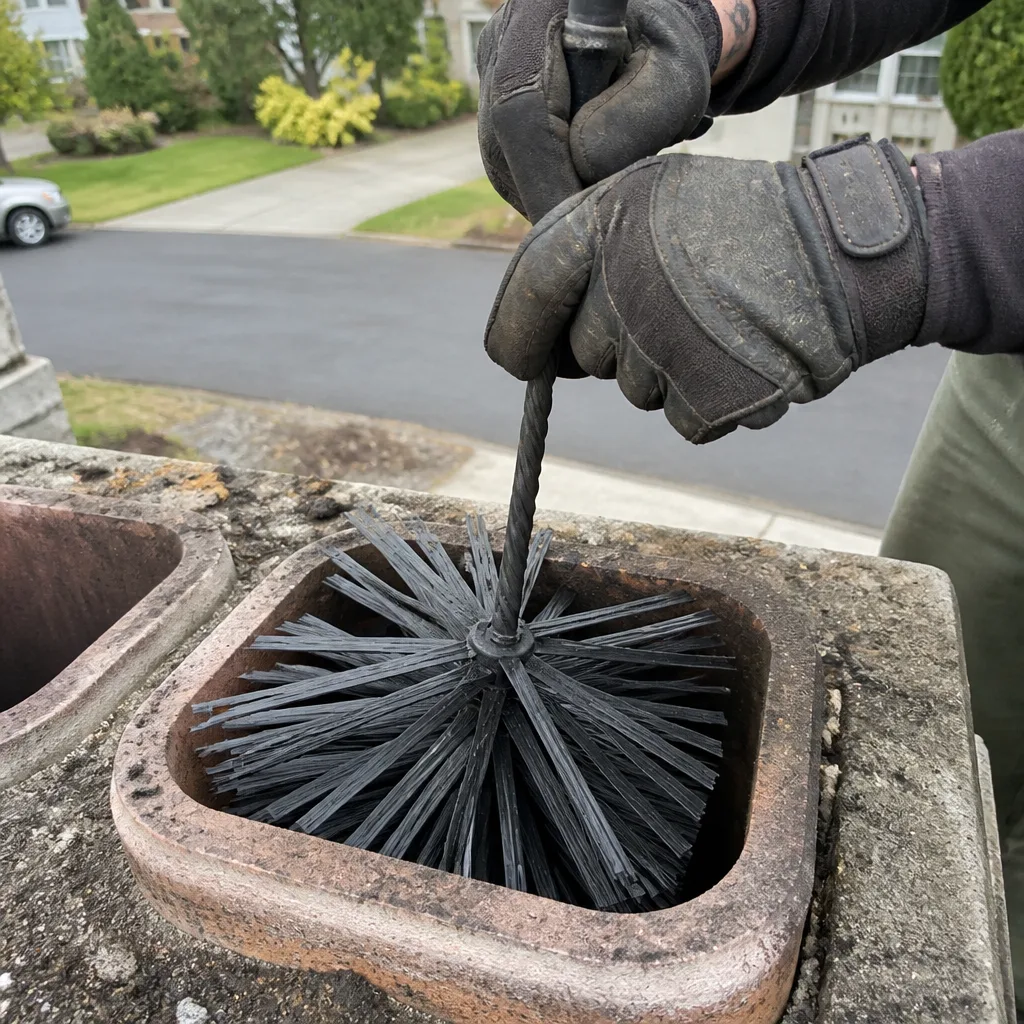
 Sweep & inspection
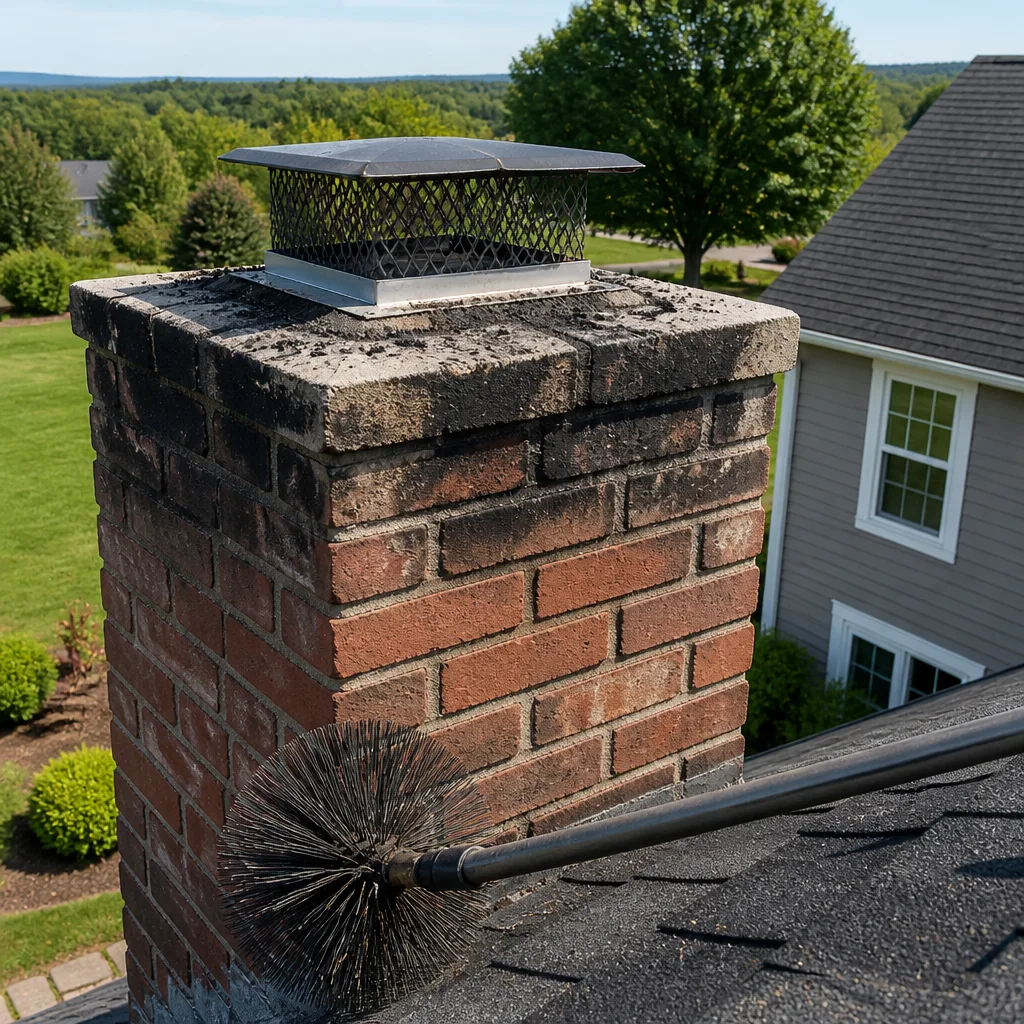
 Caps & crowns
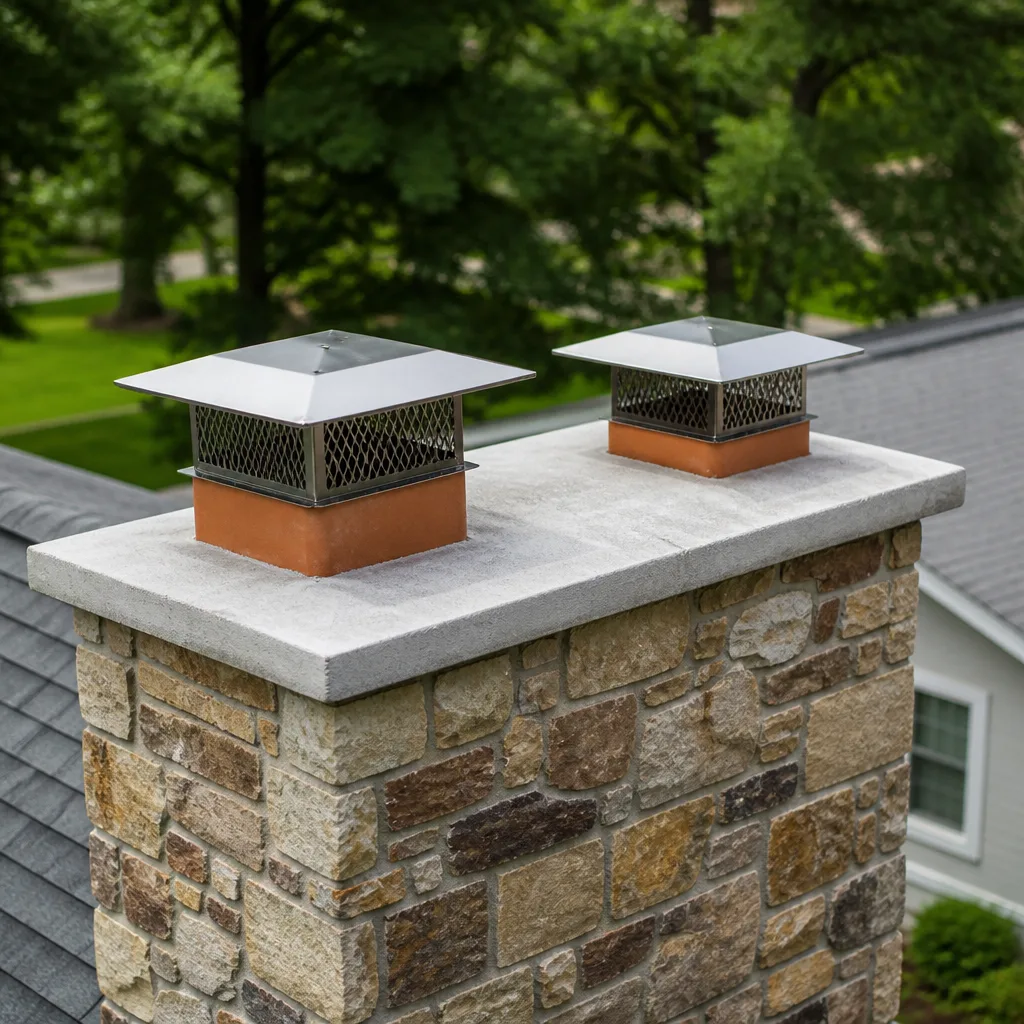
 Flue relining
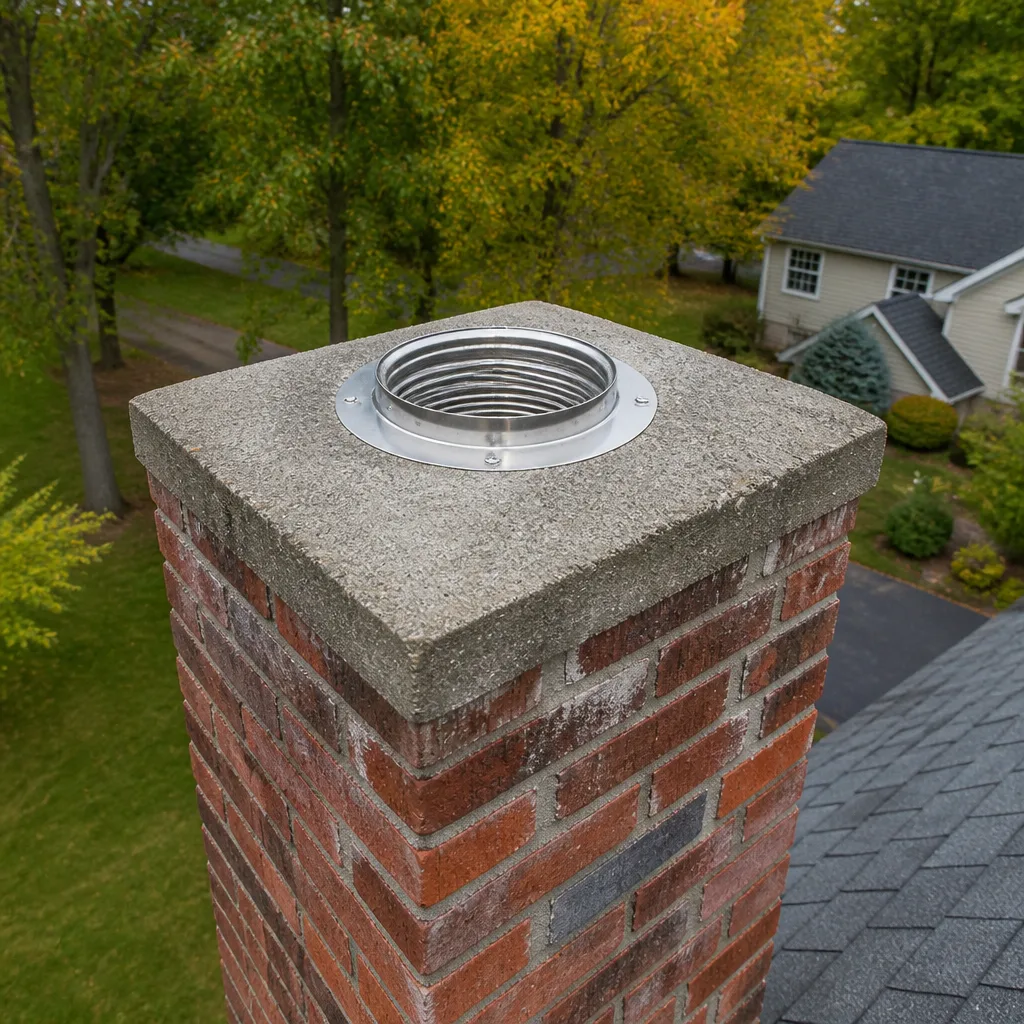
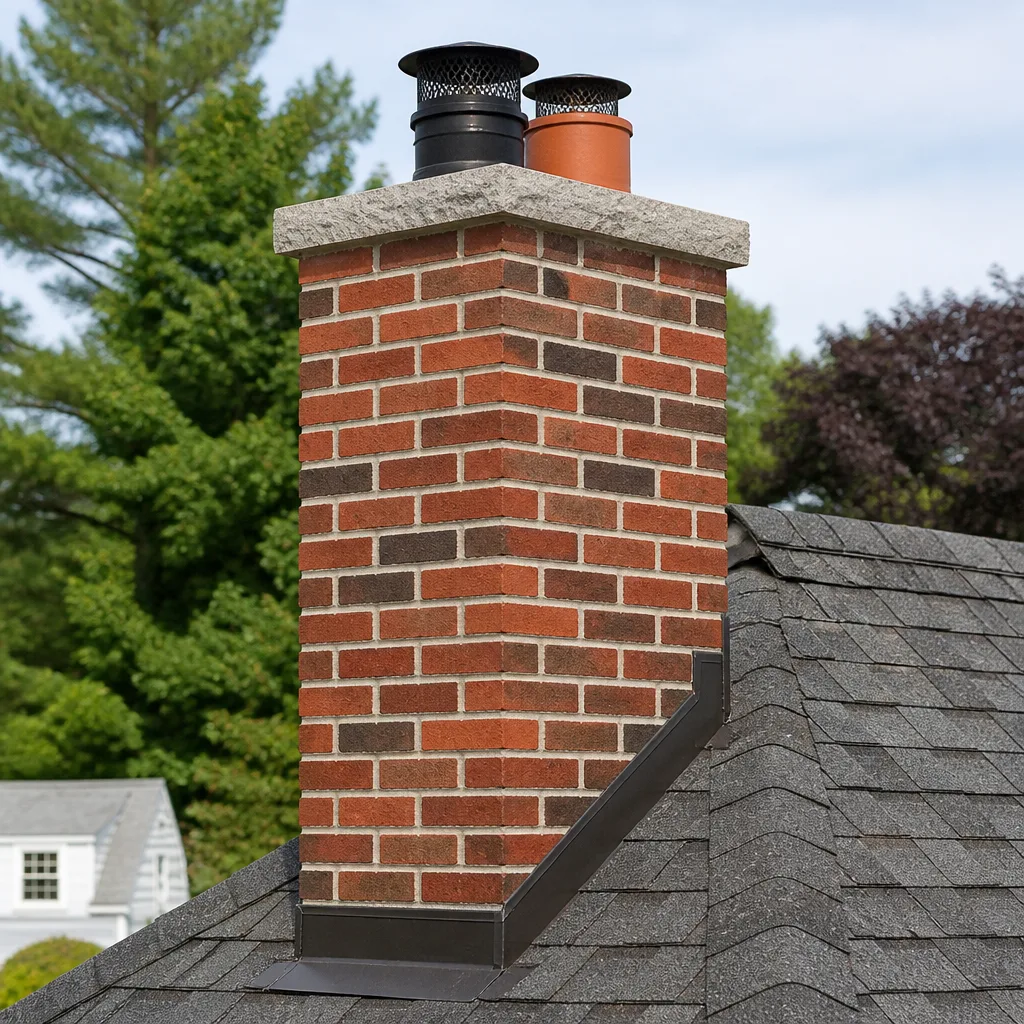 Masonry repair
 Gas fireplace service
Level 1 sweep and inspection to the NFPA 211 annual standard - flue, crown, cap, and flashing checked and photographed
Chimney sweep logs do not sweep chimneys. They loosen some creosote - which then falls where a brush and vacuum still have to collect it.
Chimney Sweep Maintenance Checklist for Redmond Homeowners
Most chimney maintenance checklists hand you a generic to-do list and no way to tell whether what you’re looking at is normal wear or a system failure in progress. That’s the gap this guide closes. You can’t inspect a flue liner from the firebox with a flashlight, but you can catch most early warning conditions from the firebox opening, the smoke chamber, and the exterior crown if you know exactly what you’re looking for and what each finding means. Below we’ve translated what a trained sweep actually checks into observable signs any Redmond homeowner can monitor between professional visits, with clear pass, flag, and call-now triage for every component.
Quick Answer
A working chimney maintenance checklist covers eight components: firebox, damper, smoke chamber, flue liner, crown, cap, flashing, and exterior masonry. Check the firebox, damper, cap, and crown yourself each season; leave the smoke chamber, liner, and flashing to a professional sweep. In Redmond, add moss and lichen on the crown, white efflorescence staining from rain infiltration, and flashing gaps opened by freeze-thaw cycles to your annual list, and photograph every component before and after each heating season.
Styles & brands we work with
- Sweep & inspection
- Caps & crowns
- Flue relining
- Masonry repair
- Gas fireplace service
Table of Contents
- How to Use This Checklist
- The Firebox and Damper: What You Can See Yourself
- The Smoke Chamber: The Overlooked Middle
- The Flue Liner: Why You Can’t Check This One Alone
- The Crown, Cap, and Flashing: Redmond’s Wet-Weather Weak Points
- Exterior Masonry, Moss, and Efflorescence
- How Often Each Component Should Be Checked
- What to Photograph and Document Each Season
How to Use This Checklist
This checklist works on a three-level triage system. Every component gets one of three ratings: pass, flag, or call now. Pass means the component looks normal for its age and you can wait for your next professional sweep. Flag means something has changed and it should be looked at during your next scheduled visit or sooner if it worsens. Call now means stop using the fireplace and pick up the phone.
The ratings matter because most chimney damage is gradual. A hairline crack in the crown isn’t an emergency in July. That same crack after a wet Redmond winter, with water tracking down into the masonry, becomes a much bigger repair. Knowing where each finding sits on that spectrum is what separates a homeowner who catches problems early from one who discovers them after the fact.
We’ve built this checklist around the questions we get most often from Redmond homeowners: what am I actually looking at, is this normal, and do I need to call someone today. Our technicians have up to 12 years of experience reading exactly these signs, and this guide reflects what they watch for on every chimney sweep visit.
Your Tool List Before You Start
- A bright flashlight, ideally one with a focused beam you can aim up the flue.
- A small hand mirror on an extendable handle for looking around corners in the smoke chamber.
- Binoculars for inspecting the crown, cap, and flashing from the ground.
- A smartphone for photos and dated notes.
- Work gloves, because creosote stains everything it touches.
That’s it. Nothing on this checklist requires getting on the roof. Climbing a wet Redmond roof to inspect a crown is how homeowners end up in the emergency room, and it’s unnecessary. Every exterior item here can be evaluated from the ground with binoculars.
The Firebox and Damper: What You Can See Yourself
The firebox is the one area where a homeowner can genuinely do a thorough visual check. It’s accessible, well-lit with a flashlight, and most failure modes show visible signs. The damper is just above it, and you can operate it from the hearth.
Firebox Check
Look at the firebrick lining the back and sides of your firebox. Hairline cracks in the firebrick are normal, especially after years of heating and cooling cycles. What’s not normal is a crack wide enough to slide a dime into, or any gap where you can see the brick behind the firebrick. Firebrick that has crumbled away leaves the steel firebox shell exposed to direct flame, which shortens its life fast.
Also check the mortar joints between firebricks. Crumbling or missing mortar is a flag item. Re-pointing firebox mortar is straightforward repair work, but it isn’t something to leave indefinitely. In our experience, small firebox mortar failures in Redmond homes often trace back to moisture that got in from above, so a firebox finding is worth pairing with a crown and flashing look.
Damper Check
Open and close the damper slowly. It should move smoothly through its full range and seat flush when closed.
- Pass: Opens and closes smoothly, seats flat, no visible rust-through.
- Flag: Stiff movement, a slight warp, or surface rust that doesn’t flake. Note it for your next professional visit.
- Call now: The damper won’t close at all, sticks open, has rusted through, or the frame is separating from the firebox.
A damper that won’t seal lets heated room air escape up the flue year-round, and it lets cold air back down in winter. A damaged damper also lets smoke spill into the room instead of up the chimney. Damper repair is well within the scope of fireplace repair, which is worth knowing before a stuck damper turns into a bigger problem.
The Smoke Chamber: The Overlooked Middle
The smoke chamber is the sloped area between the top of the firebox and the bottom of the flue. It’s where smoke compresses and accelerates on its way up. It’s also the component most homeowners never think about and most general handymen never check. That’s a problem, because the smoke chamber is where heat and creosote do some of their worst work.
You can’t see the full smoke chamber from the firebox, but you can see the bottom of it. Shine your flashlight up past the damper and look at the sloping surfaces. Here’s what to watch for.
Signs of Smoke Chamber Trouble
- Heavy, glazed creosote: Creosote that looks shiny, hardened, or glassy is the dangerous grade. It’s also the hardest to remove. This is a call-now item in most cases because glazed creosote near the smoke chamber is a chimney fire waiting for a hot load of wood.
- Crumbling parging: The masonry surface lining the smoke chamber should be smooth. If it’s rough, pitted, or flaking, gases can collect in the pits and accelerate creosote buildup. This is a flag item that a professional sweep should evaluate.
- Visible cracks or gaps: Any gap in the smoke chamber parging lets smoke and heat reach parts of the chimney structure it shouldn’t. Flag it and have it inspected.
- Smoke rolling back into the room: If smoke spills into the firebox instead of drafting up the flue when you first light a fire, the smoke chamber or flue has a drafting problem. Call now.
Smoke chamber resurfacing is real repair work. HeatShield, a specialist chimney resurfacing system we work with, is designed specifically for restoring surfaces like the smoke chamber and the liner that can’t be fixed with a simple sweep. That capability sits beyond what a sweep-only provider can offer, and it’s the reason a thorough smoke chamber check is worth doing on every visit rather than skipping to the firebox and calling it done.
The Flue Liner: Why You Can’t Check This One Alone
The flue liner is the passage the smoke actually travels through. It’s the single most important safety component in your chimney, and it’s the one you absolutely cannot inspect yourself. A flashlight beam from the firebox will show you the first few feet of the liner at best, and the parts that fail are usually higher up.
Liners fail in ways that aren’t visible from below. Clay tile liners crack from heat cycling, and cracks can open at any height. The mortar joints between tile sections can erode. Stainless steel liners can develop splits at seams or around the top connection. A camera inspection is the only way to see the whole liner.
What a Professional Liner Inspection Looks Like
- We run a camera down the full length of the flue and record what it sees.
- We check the liner material for cracks, gaps, spalling, and separation at the joints.
- We check the connection point at the top of the chimney, where the liner meets the cap or crown.
- We look at the smoke shelf and smoke chamber above the damper for creosote buildup and damage.
- We take photos at each stage and walk you through them.
The camera evidence matters because it answers the question homeowners should be asking: do I really need a new liner, or am I being sold one? Nothing gets recommended without a photo you can look at and a clear explanation of the risk. If your liner is sound, we’ll tell you so. If it needs a liner, we work with DuraFlex and other professional-grade liner systems, and the decision gets made on what the camera actually shows.
When the Liner Needs Attention
- Pass: Camera shows intact liner, no cracks or separation, no excessive creosote. Sweep and move on.
- Flag: Minor surface damage, light glazed creosote in a section, or a single small crack in a clay tile. Worth watching and re-checking next visit.
- Call now: Cracked or separated liner with visible gaps, liner that has shifted out of alignment, or any sign that heat has reached the surrounding masonry. Stop using the fireplace until it’s addressed.
A compromised liner is a serious safety issue. It can let heat reach combustible materials in the chimney structure, and it can let carbon monoxide enter the home instead of venting outside. This is not a component to defer. A trained professional needs to evaluate it.
The Crown, Cap, and Flashing: Redmond’s Wet-Weather Weak Points
Redmond’s rainy climate makes the exterior of the chimney the first place water gets in and the last place homeowners look. The crown, cap, and flashing are the three components that do the most to keep water out, and each one fails in a specific, observable way.
The Crown
The crown is the sloped concrete or masonry cap at the very top of the chimney that sheds water away from the flue. It’s exposed to every bit of rain and every freeze-thaw cycle Redmond delivers, and it’s the single most common source of chimney water damage we see. From the ground with binoculars, look at the crown’s surface and its edges.
- Pass: Surface is smooth, slopes away from the flue, no visible cracks or spalling.
- Flag: Fine hairline cracks or minor surface pits. Worth watching and worth flagging during your next inspection.
- Call now: Visible cracks wide enough to see from the ground, missing chunks, a crown that has separated from the flue, or the crown visibly sloping toward the flue instead of away from it. Every one of these lets water track directly into the chimney structure.
Crown repair and chimney cap & crown replacement are preventive work, and they’re the first line of defense against the kind of damage that gets expensive fast. We work with products like Copperfield and Famco for the caps and crowns we install because they hold up to wet weather.
The Cap
The cap sits over the top of the chimney and keeps rain, birds, and debris out of the flue while letting smoke escape. Check it from the ground.
- Pass: Cap is intact, securely attached, and the mesh or louvers are clear.
- Flag: Minor rust on the frame, a few bent louvers, or minor debris in the mesh.
- Call now: Missing cap entirely, cap that’s blown loose or crooked, rust-through holes, or a cap so damaged that water can enter the flue freely.
The Flashing
Flashing is the metal that seals the gap where the chimney rises through the roof. It’s the most common source of roof leaks around a chimney, and in Redmond the freeze-thaw cycle is a real driver. Water gets behind flashing, freezes overnight, expands, and works the flashing loose over the winter. The result is a gap that grows season over season.
You can spot flashing trouble from the ground in most cases. Look at the base of the chimney where it meets the roof. Is the metal sitting flush, or is it lifting? Are there gaps at the corner seams? Any visible gap is a call-now item for a professional, because a flashing leak will find its way into the attic and the ceiling before it’s obvious from below.
Exterior Masonry, Moss, and Efflorescence
The exterior masonry of a Redmond chimney takes a beating from rain and temperature swings. Two local signals are worth watching specifically, and both are visible from ground level.
Moss and Lichen on the Crown and Upper Masonry
Moss and lichen love a wet, cool, north-facing surface, and Redmond chimneys provide both. When you see moss or lichen growing on the crown or the upper brick, it means that surface is staying damp long enough for growth to take hold. That dampness has consequences: freeze-thaw cycles break down masonry surfaces that stay wet, and the root structure of moss and lichen can work into small cracks and widen them. A mossy crown is a flag item that signals water is sitting where it shouldn’t be. Have it assessed at the next visit and address the underlying damping, not just the growth.
Efflorescence and Brick Spalling
Efflorescence is the chalky white staining that appears on brick when water moves through the masonry and leaves mineral salts on the surface. It’s not structural damage by itself, but it’s a reliable early signal that water is getting into the masonry from somewhere. Look at the exterior faces of the chimney. White chalky patches are a flag. Pair that with a look at the crown, cap, and flashing, because those are the usual entry points.
Spalling is different. Spalling is when the face of the brick actually flakes off or crumbles. That’s structural. Any spalling brick on the chimney exterior is a call-now item for a professional assessment. Masonry that’s spalling is losing its protective outer layer, which accelerates everything else.
Mortar Joints and Brick Faces
- Pass: Mortar joints are tight, brick faces are intact.
- Flag: Crumbling mortar joints along a section, minor efflorescence, staining that appeared this season.
- Call now: Bricks that are loose, shifted, or missing, or spalling visible on multiple courses.
Masonry repair and structural chimney repair sit within the chimney service scope. Getting an honest read on the exterior keeps you from being pushed into repair work you don’t need. Every exterior recommendation we make comes with photos you can compare against what you see from the ground.
How Often Each Component Should Be Checked
Blanket “annual inspection” advice is too blunt for real maintenance. Different components fail at different rates and tolerate different intervals. Here’s the frequency that actually matches how each part wears.
| Component | Homeowner Check | Professional Check |
|---|---|---|
| Firebox and firebrick | Each heating season | Every sweep visit |
| Damper | Each heating season | Every sweep visit |
| Smoke chamber | Visual glance at bottom each season | Annually, with a light and mirror |
| Flue liner | Not a homeowner task | Annually with camera; more often if flagged |
| Crown | Each season with binoculars | Annually |
| Cap | Each season with binoculars | Annually |
| Flashing | Each season from ground | Annually, and after any noticeable wind or ice event |
| Exterior masonry | Each season from ground | Annually |
What Changes the Schedule
- Any flagged component: Re-check professionally within the year rather than waiting for the next scheduled annual visit.
- Heavy fireplace use: If you burn daily through the heating season, the liner and smoke chamber deserve a sweep more than once a year.
- Recent storm: Any significant wind or ice event in Redmond is a reason to look at the cap and flashing, not the whole chimney.
- New creosote smell: A strong smoky smell in the house during warm weather usually means creosote in the smoke chamber, not the firebox. Get it looked at.
The general rule: an annual sweep and inspection is the baseline, and any flagged item moves up the schedule. The Redmond Chimney Sweep team structures every visit around this component-by-component model so nothing on the checklist gets skipped.
What to Photograph and Document Each Season
Photos protect you in two ways. They help you track changes season over season, which is how you catch slow deterioration before it becomes repair work. And they give you evidence if there’s ever an insurance claim or a warranty question about a chimney liner, cap, or crown installation.
Photo Checklist Before Each Heating Season
- The firebox interior, straight on with the flashlight on each side.
- The damper in both the open and closed positions.
- Anywhere you can see of the smoke chamber from below the damper.
- The crown and cap from ground level with binoculars, plus a wide shot of the chimney top showing all sides.
- The flashing on each side of the chimney where it meets the roof.
- The exterior masonry on each visible face of the chimney.
Photo Checklist After Each Heating Season
Repeat all six shots from the same angles you used before the season. Compare them side by side. A hairline crack that was one pixel wide in October and visibly wider in April is a finding worth flagging. So is a small moss patch that doubled in size, or a flashing seam that opened up over the winter. This before-and-after habit is the simplest thing a Redmond homeowner can do to track chimney health over time, and it costs nothing but a few minutes each season.
Keep your photo sets with your chimney records, along with the date of any sweep, inspection, or repair. If a professional ever tells you the crown or the liner needs repair and you’re unsure, those photos from your last professional visit give you a comparison point. Nothing gets recommended without camera evidence you can see, and your own photo record is the second layer of that evidence.
Common Mistakes to Avoid
- Skipping the smoke chamber. If your sweep cleans the firebox and calls it done, they’ve missed the most important middle section. Ask specifically whether the smoke chamber was checked and whether the parging is intact.
- Assuming annual means enough. An annual sweep is the baseline, not the answer for every component. Heavy fireplace users in Redmond should schedule liner checks more often than once a year.
- Ignoring moss on the crown. Moss is a moisture signal, not a cosmetic problem. Wet masonry and moss on the crown mean water is lingering long enough to do damage, and freeze-thaw cycles will capitalize on it.
- Writing off efflorescence. Chalky white staining is an indicator that water is moving through the masonry. Treat it as a flag to investigate rather than a cosmetic issue.
- Climbing the roof to check the crown yourself. A wet Redmond roof is a genuine hazard. Use binoculars from ground level. The view is good enough.
- Skipping the photos. If you have an insurance claim or a warranty issue, dated before-and-after photos are what gets the conversation moving. No photos means no evidence.
- Treating a liner recommendation as a sales pitch, or as gospel. The right response is to look at the camera footage. If the pro won’t show you the footage, get a second opinion. If they show you cracked or separated liner, that needs to be fixed before the next fire.
See the difference
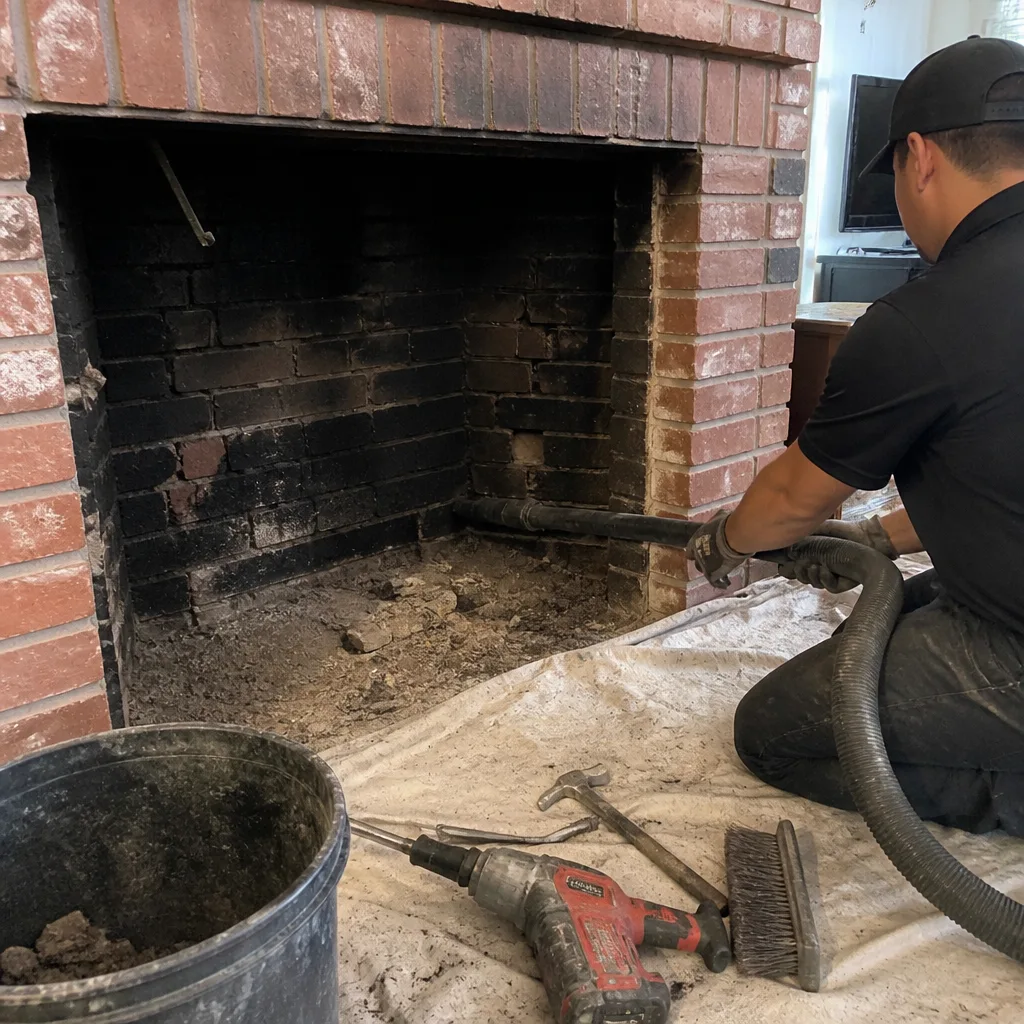 Before
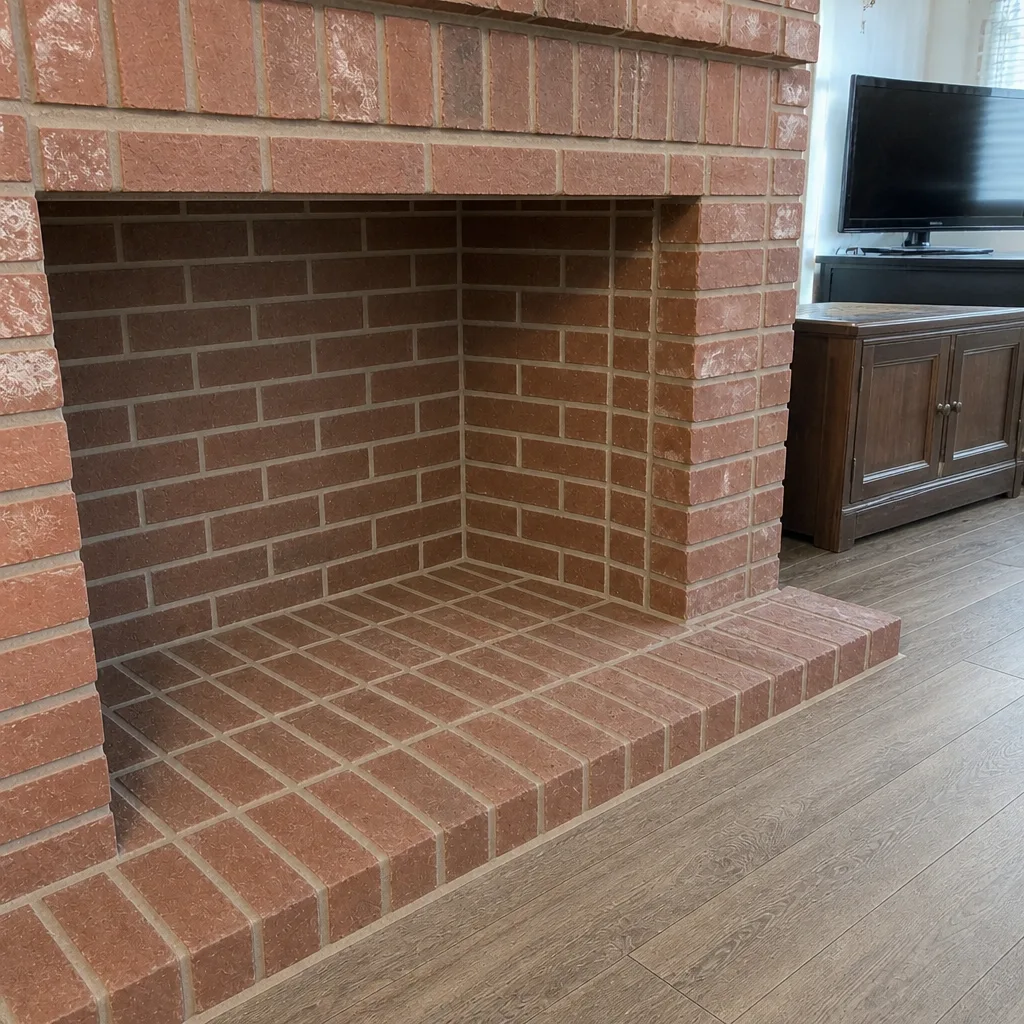 After
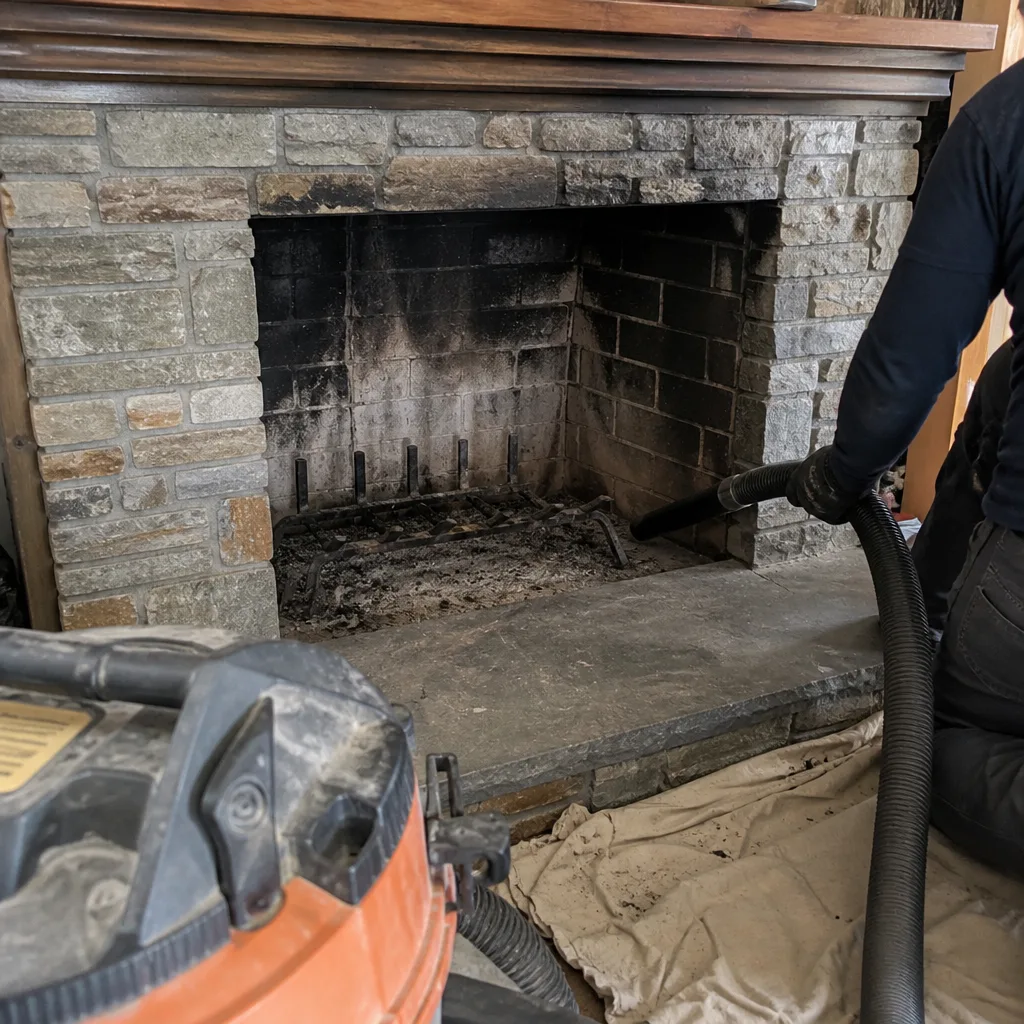 Before
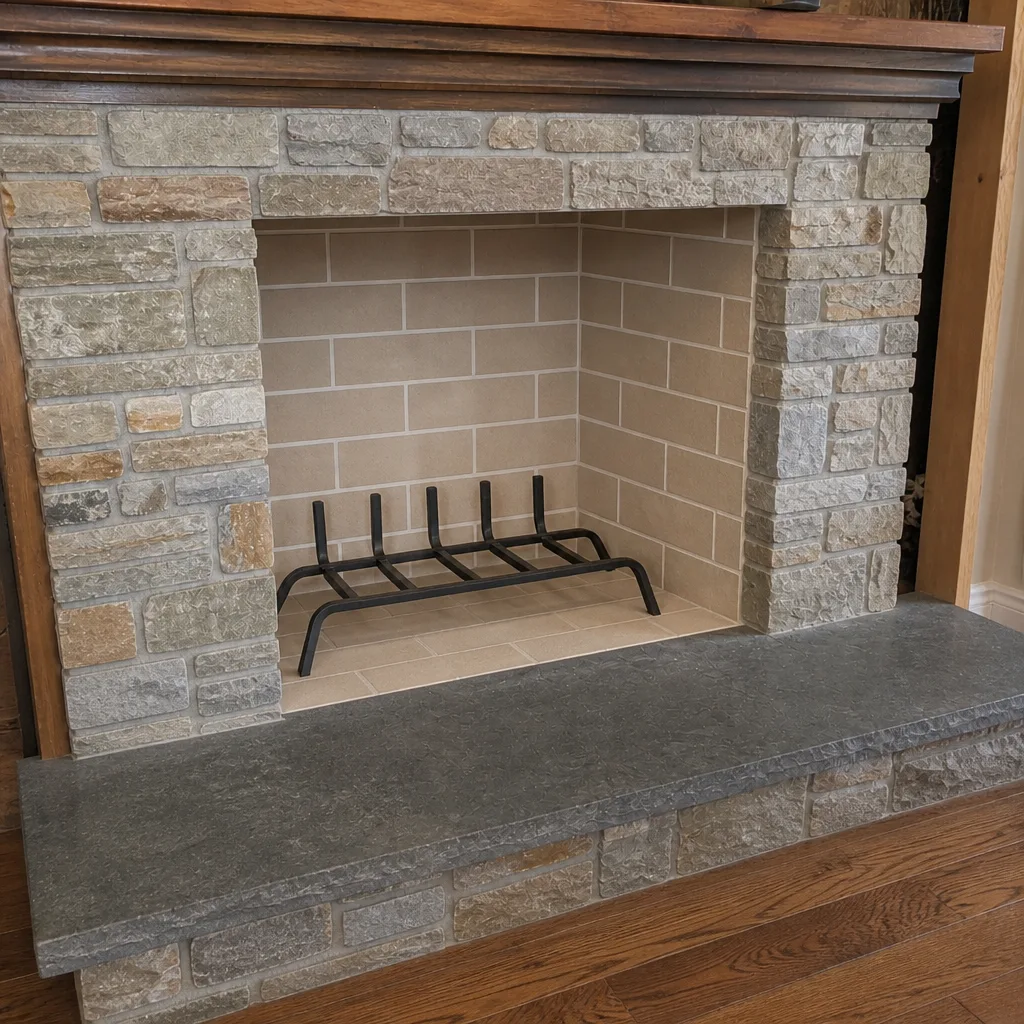 After
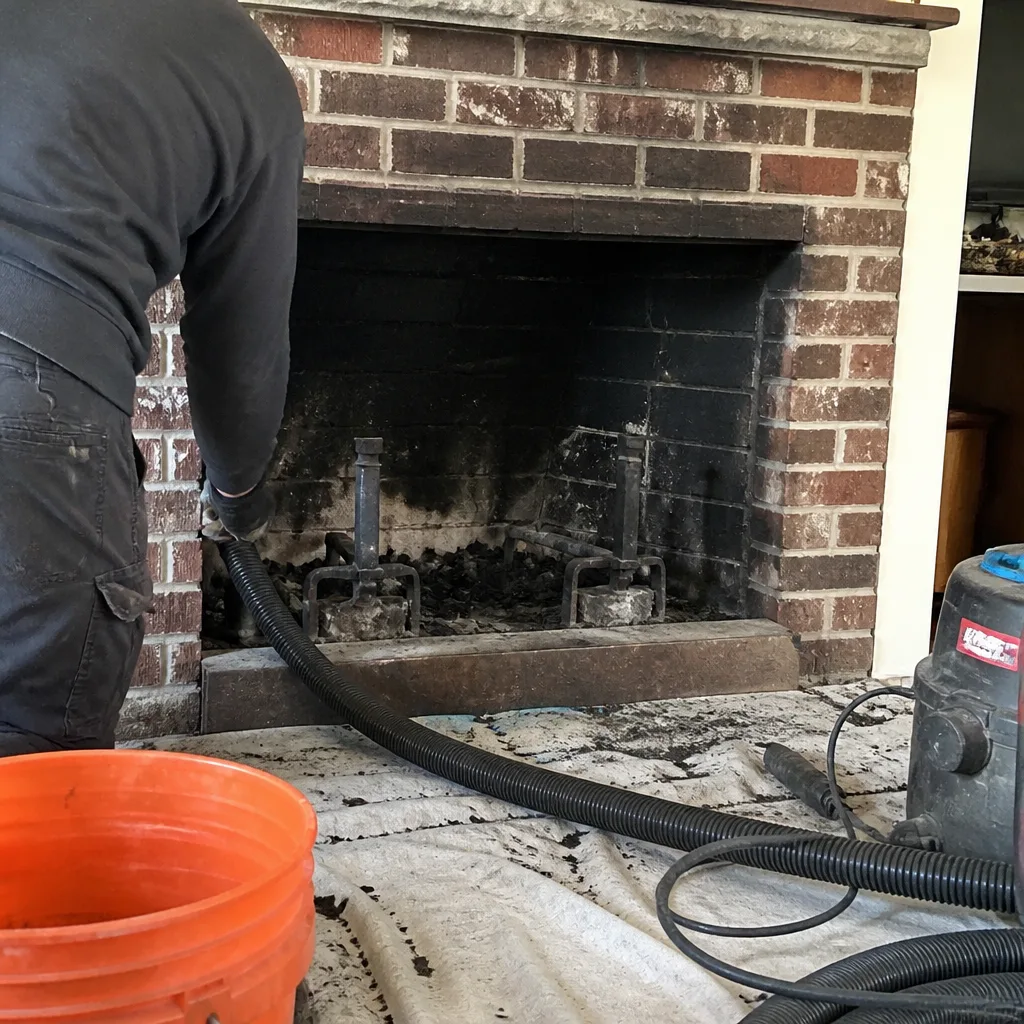 Before
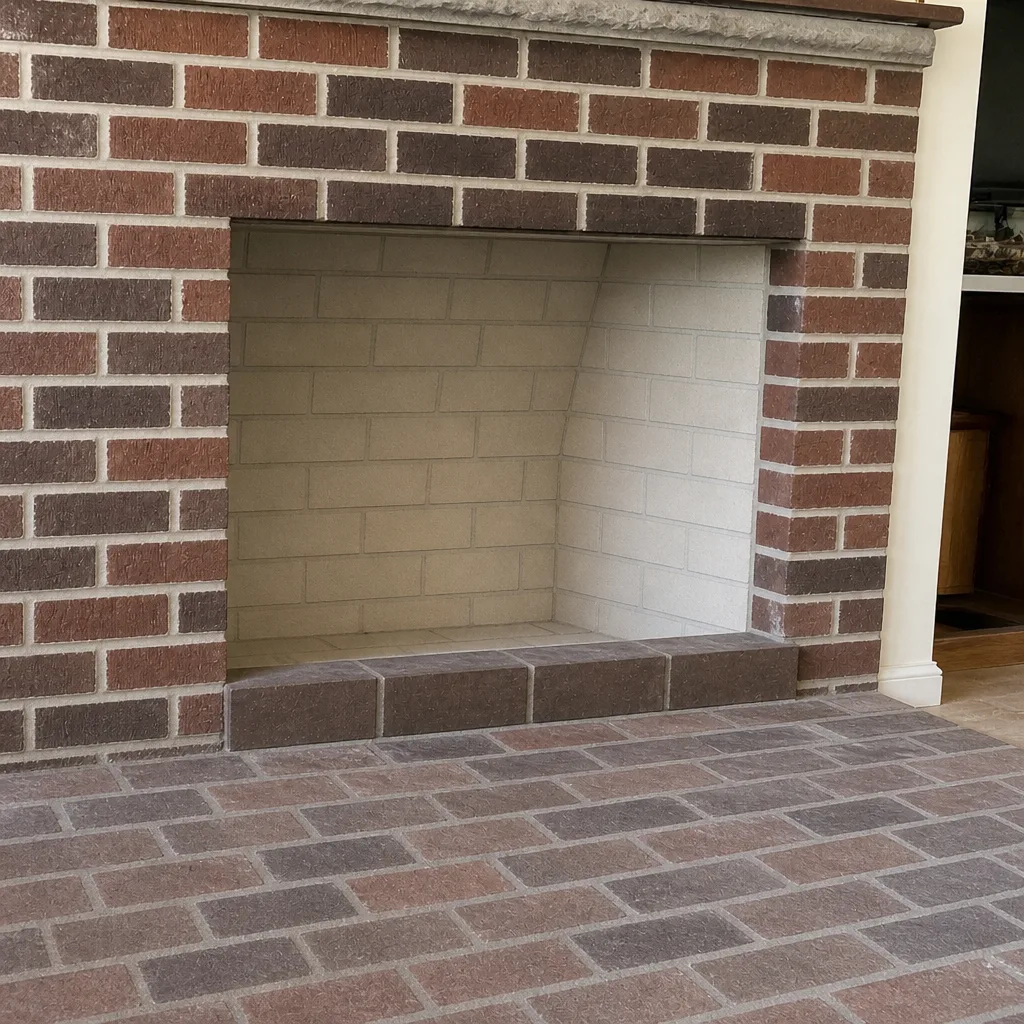 After
When to Call a Professional
Call a professional immediately if you see cracked or separated liner in the firebox view, smoke spilling into the room when you light a fire, glowing or glazed creosote inside the firebox or smoke chamber, a damper that won’t close, flashing that’s visibly lifting from the roof, or any spalling brick on the chimney exterior. Those are the call-now items, and they aren’t things to watch over the winter. Schedule a proper visit for a firebox crack you can slide a dime into, crumbling smoke chamber parging, visible crown cracks, moss or efflorescence on the crown, or any item you flagged yourself that’s still there at your next professional visit. When in doubt about the firebox and the smoke chamber, a professional sweep is a cheap and quick way to resolve it.
Redmond Chimney Sweep offers free estimates in Redmond. Call (877) 492-1807. We answer 24/7. Fast dispatch from 7am to 7pm, Sunday through Friday.
Frequently Asked Questions
A complete checklist covers eight components: firebox, damper, smoke chamber, flue liner, crown, cap, flashing, and exterior masonry. Redmond needs three extra items on top of the standard list: moss and lichen on the crown, efflorescence staining, and freeze-thaw flashing gaps. Check the firebox, damper, cap, and crown yourself each season and leave the smoke chamber, liner, and flashing to a professional.
Once per heating season is the baseline for most homes. If you burn wood daily through the winter, the smoke chamber and liner deserve more frequent attention. Any component you’ve flagged should be checked at the next professional visit rather than waiting for the annual. Call (877) 492-1807 for exact scheduling.
You can check four components yourself: the firebox, the damper, the cap, and the crown. You cannot safely or accurately inspect the smoke chamber, flue liner, or flashing, because none of those are fully visible from the firebox or from the ground. A camera inspection is the only way to see the whole liner, and any professional who won’t show you the camera footage isn’t giving you the whole picture.
Both are moisture signals. Moss and lichen grow where masonry stays damp, and chalky white efflorescence appears when water moves through brick. Neither is structural damage on its own, but both mean water is finding a way in. The fix is to track down the entry point, usually the crown, cap, or flashing.
Look for cracks wide enough to see from the ground, missing chunks, or a crown that has separated from the flue. A crown that slopes toward the flue instead of away from it is a problem, because it channels water into the chimney instead of off the sides. Minor hairline cracks can wait for your next scheduled visit. Anything wider than a hairline is worth a professional look.
Six shots before each heating season and six after: the firebox interior, the damper open and closed, the smoke chamber as far up as you can see, the crown and cap from the ground, the flashing on each roof side, and the exterior masonry on each visible face. Keep them dated with your other chimney records. They’re what you’ll want if you ever need to compare a professional finding against your own record.
Call (877) 492-1807 for a free estimate on a sweep or inspection, or to have us walk through anything on this checklist that has you concerned. We answer 24/7. Fast dispatch from 7am to 7pm, Sunday through Friday.
The Bottom Line
Chimney maintenance is a component-by-component job, not a once-a-year sweep. Check the firebox, damper, cap, and crown yourself each season with a flashlight and binoculars. Leave the smoke chamber, liner, and flashing to a professional with a camera. In Redmond, add moss, efflorescence, and freeze-thaw flashing gaps to your list. Use pass, flag, and call-now ratings to know when to wait and when to pick up the phone, and photograph every component before and after each heating season so you can see what’s changing. One company for the entire chimney system means everything from a routine sweep through liner resurfacing and masonry repair is handled by one team working with the brands professionals trust: DuraFlex, HeatShield, Copperfield, and more. A clean chimney is the starting point. A safe, structurally sound chimney is the goal.
Call (877) 492-1807 for a free estimate. We answer 24/7. Fast dispatch from 7am to 7pm, Sunday through Friday.
Written by the team at Redmond Chimney Sweep.