
Last updated November 25, 2026
 Sweep & inspection
 Caps & crowns
 Flue relining
 Masonry repair
 Gas fireplace service
Level 1 sweep and inspection to the NFPA 211 annual standard - flue, crown, cap, and flashing checked and photographed
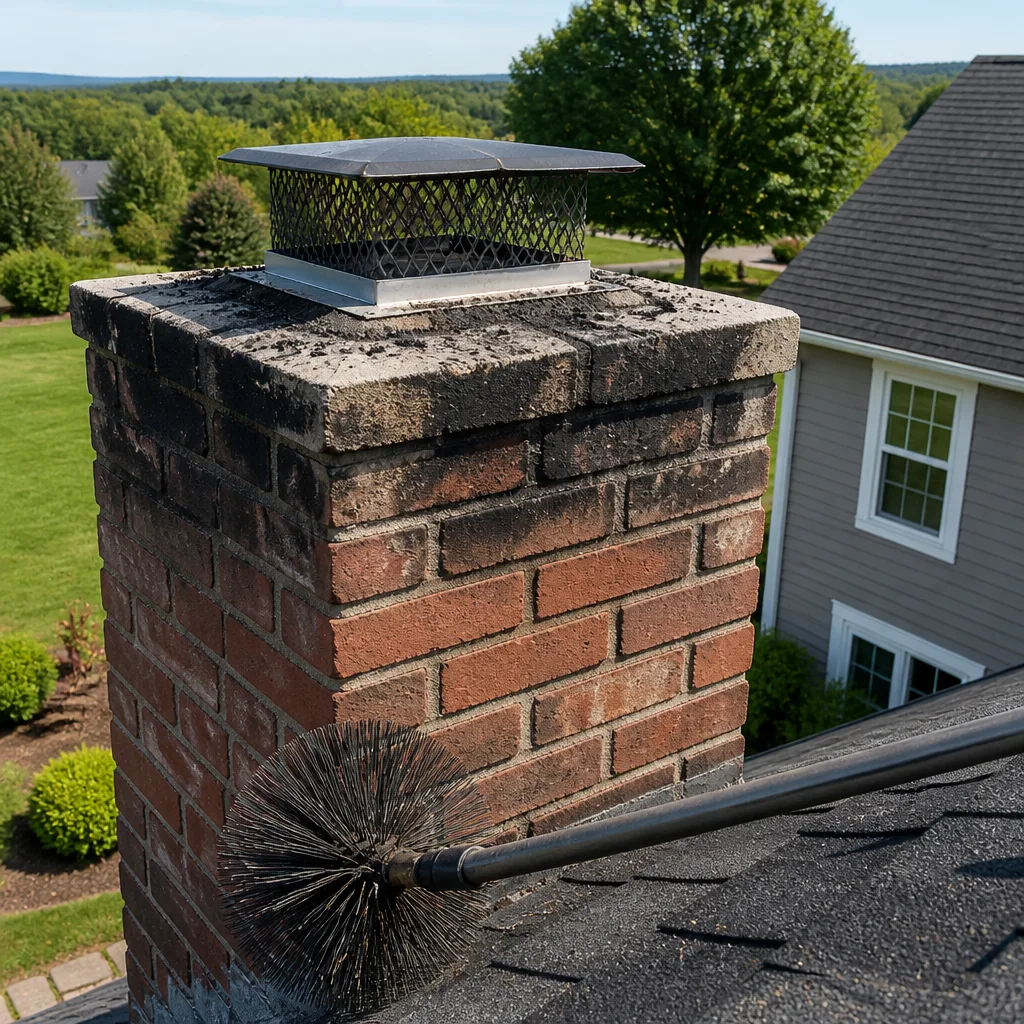
Chimney sweep logs do not sweep chimneys. They loosen some creosote - which then falls where a brush and vacuum still have to collect it.
Chimney Sweep Troubleshooting in Redmond: Common Problems and How to Fix Them
A smoky living room isn’t a chimney problem. It’s a pressure problem, a draft problem, or a blockage problem. Those three have completely different fixes, and confusing them is exactly why some homeowners pay for a cleaning twice and still can’t keep a fire lit. The same logic applies to white staining on the brick, a damper that won’t close, or a fire that smolders no matter how dry the wood is. Each visible symptom points to a specific mechanical cause. What follows is a troubleshooting framework we use on Redmond chimneys every working week: how to read the symptom, what it usually means, and when the fix is something you can observe yourself versus something only a camera can find.
Quick Answer
Most chimney problems in Redmond trace back to one of five causes: a blockage (creosote, debris, a bird or squirrel nest), a draft or pressure imbalance in the house, water intrusion through the cap or crown, a failed or cracked liner, or a damper that no longer seals. Matching the symptom to the cause before booking any work prevents paying for a cleaning when the real issue is a repair. If you can’t tell which cause you’re facing, a camera inspection settles it.
Styles & brands we work with
- Sweep & inspection
- Caps & crowns
- Flue relining
- Masonry repair
- Gas fireplace service
Table of Contents
- Symptom-to-Cause Mapping: What Your Chimney Is Telling You
- Blockage Versus Draft: The Diagnostic That Changes the Fix
- How Redmond’s Wet Climate Accelerates Specific Failures
- Water Intrusion: Staining, Rust, and the Cap and Crown Connection
- Liner Problems You Can’t See and How We Find Them
- What You Can Diagnose Yourself and What Needs a Camera
- When Cleaning Solves It and When Repair Comes First
- Common Mistakes to Avoid
Symptom-to-Cause Mapping: What Your Chimney Is Telling You
Chimneys don’t fail randomly. They fail in patterns, and each pattern leaves a signature. The trick is reading the signature before you call anyone. Here’s the mapping we run through first on any Redmond chimney call, whether the fireplace is in a 1970s ranch house near Marymoor Park or a newer build up on Union Hill.
White, chalky staining on the exterior brick is efflorescence and spalling, and it means water is getting in and pushing mineral salts out through the masonry as it dries. Smoke spilling back into the room when you light a fire points to a pressure imbalance, a blocked flue, or a chimney that’s too short for the roofline. Slow ignition and a lazy draft usually mean a cold flue, wet wood, or a partially obstructed flue. A damper that sticks or won’t close fully often means rust, and rust means moisture has been sitting in the firebox.
- White staining on brick: water intrusion through the crown, cap, or mortar joints.
- Smoke rollback into the room: negative pressure, blockage, or insufficient flue height.
- Smell of smoke or creosote on warm days: draft reversal or creosote buildup holding odor.
- Rust on the damper or firebox: ongoing moisture, usually from above.
- Cracked or flaking interior brick: heat stress, water damage, or both.
- Debris in the firebox after a storm: a failed or missing cap.
- Poor draft that improves once the fire roars: a cold flue priming problem, not a structural one.
Match the symptom first, then decide whether the next step is a sweep, an inspection, or a repair. That single discipline is where chimney sweep work either becomes productive or turns into a repeat visit.
Blockage Versus Draft: The Diagnostic That Changes the Fix
These two look identical from the sofa. Both produce smoke in the room. Both make the fire hard to light. But the fixes are opposite, and applying the wrong one makes the problem worse. A blockage is physical obstruction inside the flue: creosote, a nest, a fallen piece of masonry, or a collapsed liner section. A draft problem is a pressure or temperature issue where the flue is open but can’t pull air up the way it should.
Here’s the diagnostic sequence we run, and you can watch for the same signs:
- Check the flue is actually open. A flashlight up the damper reveals obvious blockage. If you see daylight or a dark void, the flue isn’t blocked at the top.
- Test the draft with a smoke match. Hold a lit match near the open damper. If smoke rises cleanly up the flue, draft is working. If it drifts into the room or hangs, you have a pressure problem.
- Rule out house pressure. Open a nearby window an inch and light the fire again. If the smoke suddenly draws, the chimney isn’t the problem, the house is depressurized by a bath fan, kitchen exhaust, or a tight modern envelope.
- Look for the nested obstruction. Nests are common in Redmond because of the surrounding tree canopy. A flue that drafts fine all summer and then suddenly fails in early fall often has new occupants.
- Only then call for a camera. If the match test draws and the window test doesn’t change anything, the cause is inside the flue and needs to be seen.
Why it matters: brushing a blocked flue clears the obstruction and the draft returns on its own. Brushing a draft-impaired flue does nothing except bill you for a sweep that can’t solve the issue. In our experience, this single distinction accounts for more repeat visits in Redmond than any other diagnostic error.
How Redmond’s Wet Climate Accelerates Specific Failures
Redmond sits in a marine-influenced climate with wet winters, damp shoulder seasons, and a summer that swings humid. Chimneys here face a specific set of failure modes that drier climates avoid entirely. If you moved here from eastern Washington or the Southwest, the timeline of failure on your chimney is different than the one you grew up with.
Spalling brick is the classic Redmond issue. Masonry absorbs moisture during the wet months, freezes and thaws through the shoulder seasons, and flakes off in layers. Once the face of the brick starts spalling, the interior absorbs water faster, and the whole crown-and-flue-cap system takes on more load than it was designed for. Rusted dampers follow directly. A cast-iron or steel damper sitting in a firebox that gets damp from above corrodes from the outside in, and once it stops sealing cleanly, heated air escapes up the flue year-round instead of staying in the firebox.
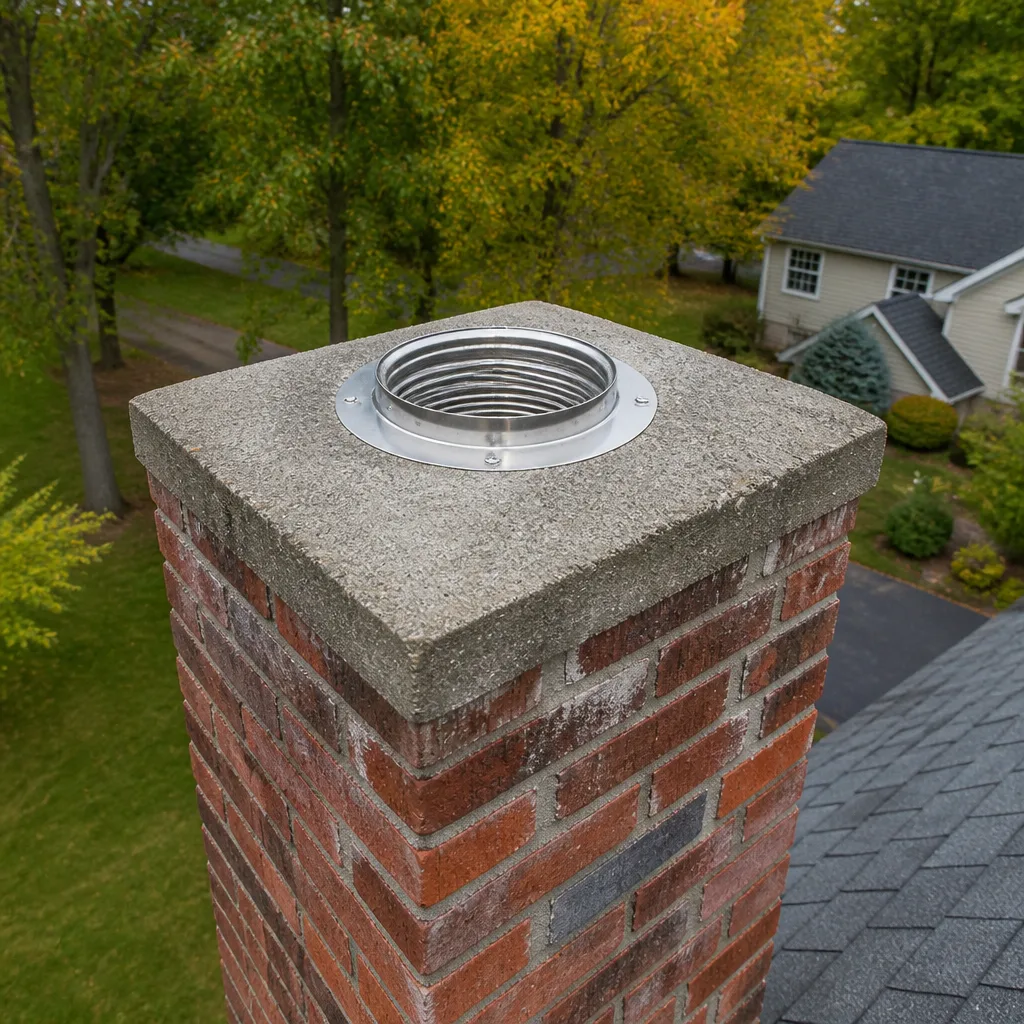
Liner condensation is the third problem specific to this climate. Clay tile liners absorb moisture from combustion gases when the flue is cold and the air is damp, and the repeated wet-dry cycle hairline-cracks the tiles. That’s why we see so many failing clay liners on Redmond chimneys that look structurally sound from the outside. When a liner has gone past what a clay tile can hold up to, a stainless system like DuraFlex is the standard replacement, and when the flue is intact but the surface is rough, a resurfacing product like HeatShield restores it without a full reline.
Damp wood makes all three worse. A chimney that drafts poorly because the wood is wet runs cooler, which lays down more creosote, which then attracts moisture. That’s the cycle to break.
Water Intrusion: Staining, Rust, and the Cap and Crown Connection
Nine out of ten water problems we find on Redmond chimneys trace to one of two components: the cap or the crown. That’s the whole reason we treat chimney cap & crown work as a diagnostic specialty and not an afterthought.
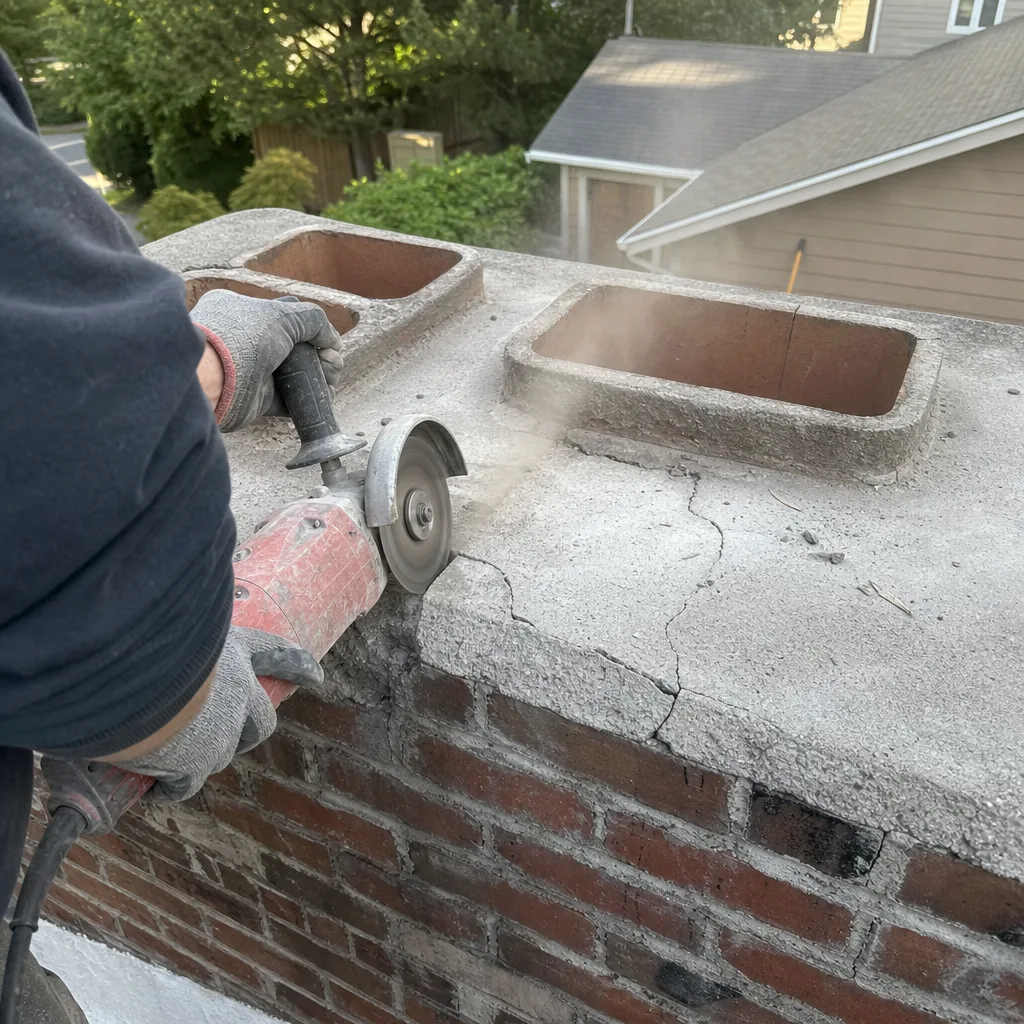
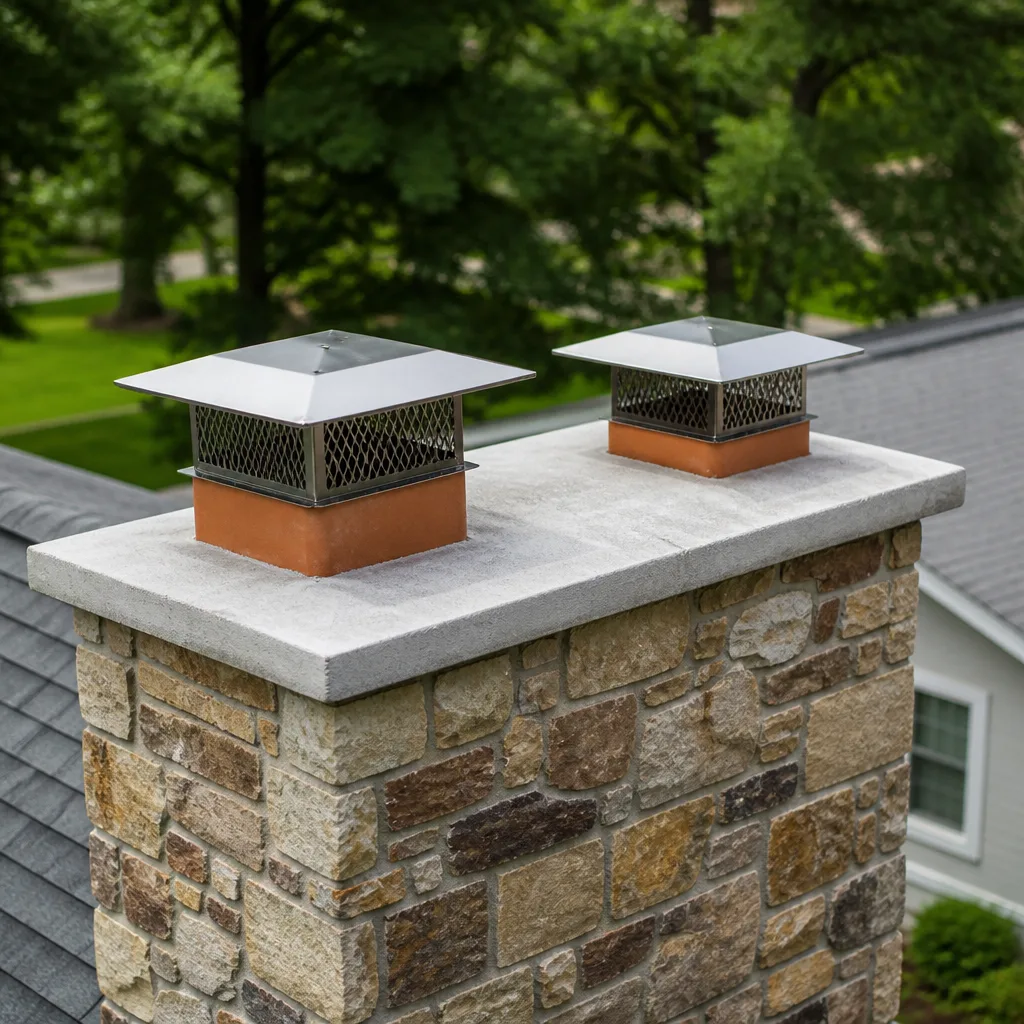
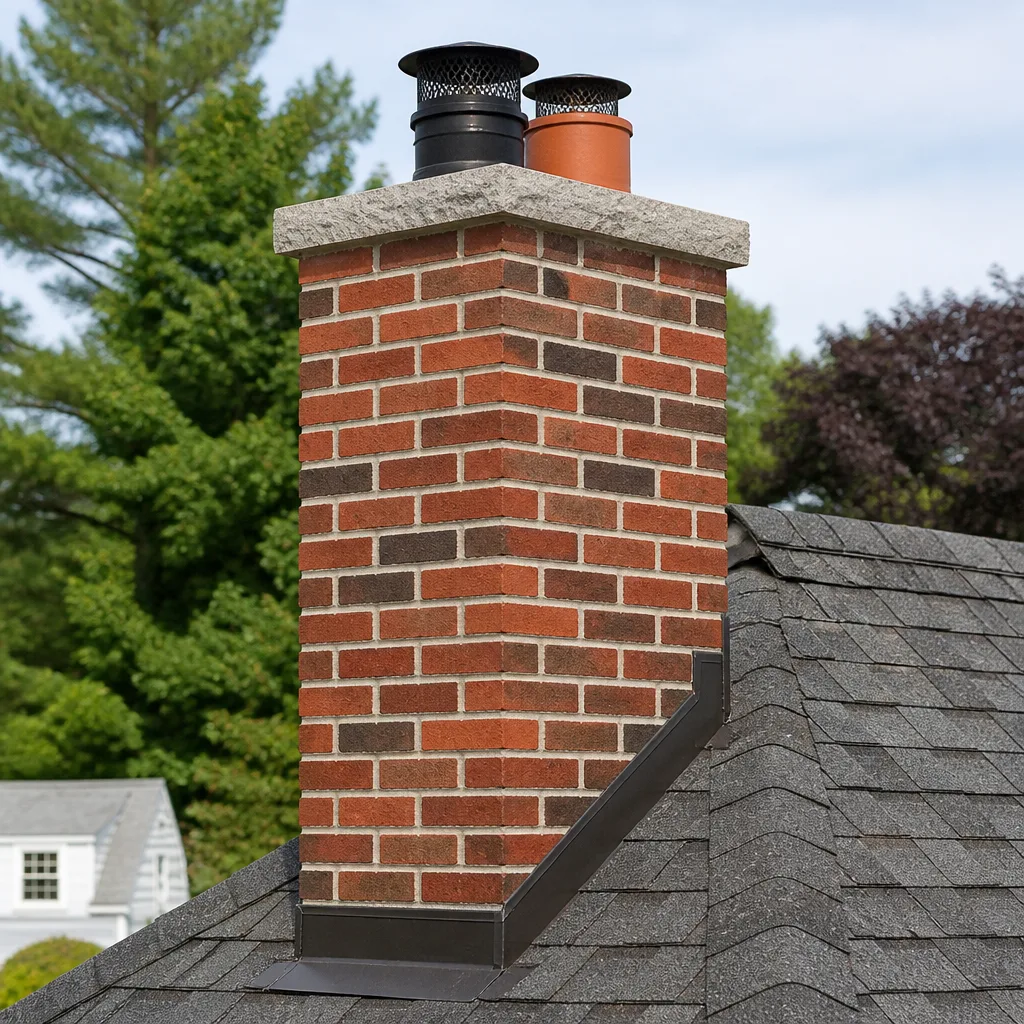
The chimney cap is the metal hood that sits over the flue opening. It keeps rain, snow, leaves, and animals out. When the cap is missing, damaged, or the wrong size, water enters the flue directly, and the whole chimney takes on water from the top down. The crown is the concrete slab on top of the chimney that sheds water away from the masonry at the roofline. When the crown cracks, water seeps into the brick structure itself, and the damage shows up as spalling and interior staining far from where the crack started.
Signs to look for from the ground:
- A cap that’s rusted through or visibly deformed.
- A crown with a visible crack, or moss and plant growth on the crown.
- White staining at the top of the chimney that fades as it moves down.
- Water stains on the ceiling near the chimney penetration.
- Rust on the firebox or damper that reappears after cleaning.
What fixes it: a properly sized stainless cap sealed to the flue, and a crown that has been either repaired with a flexible masonry product or rebuilt. We install Famco and Copperfield caps and crowns because both are the kind of product line the certified trade relies on. Famco in particular covers a wide range of flue sizes, which matters when you’re matching a cap to an older Redmond home where the flue isn’t a modern standard size. Once the cap and crown are sound, most of the water-related damage inside the chimney stops progressing.
Liner Problems You Can’t See and How We Find Them
A liner failure is the chimney problem most likely to go unnoticed until it becomes expensive. The liner is the flue interior surface, and on older Redmond homes it’s typically clay tile. Clay liners crack, separate at the joints, and lose their ability to contain combustion gases. From the living room, you may notice nothing at all, or you may notice a faint smell on damp days.
Why it matters: a compromised liner lets heat and gases reach the surrounding wood framing and masonry. That’s the failure pathway behind most chimney fires, and it’s why liner inspection is not optional if you’re using the fireplace. The tricky part is that hairline cracks and joint gaps are invisible from the firebox looking up with a flashlight. You need a camera.
What a camera inspection shows us:
- Joint gaps between clay tiles, which allow gases to escape into the masonry.
- Hairline cracks caused by the freeze-thaw cycle common in Redmond winters.
- Spalling on the interior face, where tile surface flakes off and leaves a rough channel.
- Offset and misalignment, where the flue changes direction and creates turbulence.
- Prior failed patches, where cement was smeared over a crack and has since let go.
When the diagnosis is confirmed, we look at what the actual condition supports. A flue that’s intact but has a rough interior and small joint gaps is a candidate for HeatShield resurfacing, which restores a smooth, sealed surface without replacing the liner. A flue with structural separation needs a full reline, and that’s where a stainless system like DuraFlex comes in. The point is the diagnosis drives the product choice, not the other way around. That’s a big part of why we work with professional-grade product lines: the diagnosis tells us what the flue needs, and we choose from a curated roster that can meet it.
What You Can Diagnose Yourself and What Needs a Camera
Most homeowners can rule out a good chunk of causes before calling anyone. Some problems, though, only reveal themselves on camera, and no amount of flashlight and guesswork will uncover them.
You can diagnose:
- A missing or damaged cap, from the ground with binoculars.
- A visible crack in the crown.
- An open flue, using a flashlight up through the damper.
- A draft problem, using the smoke-match and open-window test.
- Water stains on the ceiling or white staining on the exterior brick.
- A damper that sticks, from inside the firebox.
You need a camera to diagnose:
- Cracked or gapped clay liner tiles.
- Interior spalling that hasn’t reached the surface yet.
- Creosote glaze that has bonded to the flue wall.
- A partially blocked flue where the obstruction is above the first tile joint.
- Any damage above a chimney chase or offset.
The dividing line is simple. If you can see it, you can troubleshoot it. If it’s in the flue above the firebox, a camera is the only honest way to know what’s happening. A chimney sweep visit includes a camera inspection of the flue as part of the report, which is exactly why we don’t recommend skipping it. Call (877) 492-1807 to book a camera inspection. We answer 24/7. Fast dispatch from 7am to 7pm, Sunday through Friday.
When Cleaning Solves It and When Repair Comes First
Here’s a riddle that comes up on almost every Redmond chimney call: when is a sweep the wrong first step? Answer: whenever the flue has a structural problem that needs to be repaired first. Cleaning a chimney whose liner has failed doesn’t fix the failure, and in the wrong case it can dislodge a fragile tile joint and make the situation worse.
Clean first when:
- The symptom is a draft issue and the flue is intact.
- Creosote buildup is the confirmed cause of a slow draft.
- The chimney has been swept at the recommended interval and just needs routine service.
- A blockage from animals or debris is the only problem found.
Repair first when:
- The camera shows a cracked or separated liner.
- The crown is cracked and water is entering the structure.
- The cap is missing and the flue has been absorbing water.
- Interior spalling has left a rough channel the brush would grind against.
In our experience, the honest answer to “do I need a cleaning” depends entirely on what the inspection finds, and we don’t recommend cleaning when a repair is the real fix. If your fireplace repair issue is a damper, a cracked firebox brick, or a smoke chamber problem, that’s a hearth-side repair, not a flue cleaning, and we handle both as part of the same visit. One company through the whole system means the diagnosis and the fix don’t get lost between two contractors.
Quick rule of thumb: if the chimney hasn’t been opened and inspected since you moved in, the first visit should be inspection, not sweeping. Once we know the condition, the next step is obvious.
Common Mistakes to Avoid
- Booking a sweep before a diagnosis. Brushing a blocked flue clears it; brushing a draft-impaired flue wastes your money. Ask what the visit is going to find before you schedule it.
- Assuming a cap is optional. In Redmond’s wet climate, a missing cap means water is entering the flue on every rainy day. That’s how dampers rust and liners spall.
- Ignoring white staining on the brick. Efflorescence is water pushing minerals out through the masonry. It’s the earliest visible sign of a crown or cap problem, and it’s the cheapest moment to fix it.
- Treating a smoky fire as a cleaning issue. Smoke rollback is almost always pressure or blockage. Cleaning rarely fixes it if draft is the cause. Test with a match and an open window before booking.
- Running a fire on wet wood. Wet wood burns cool, lays down more creosote, and holds moisture in the system. Season your wood properly; it’s a cheap way to extend the life of your liner.
- Smearing cement over a liner crack. Cement patches are the classic short-term fix that fails within a heating season. A camera inspection tells you whether the flue needs resurfacing or a full reline.
- Skipping the inspection because the chimney “looks fine.” The failures that matter are inside the flue. From the living room, a cracked liner is invisible.
See the difference
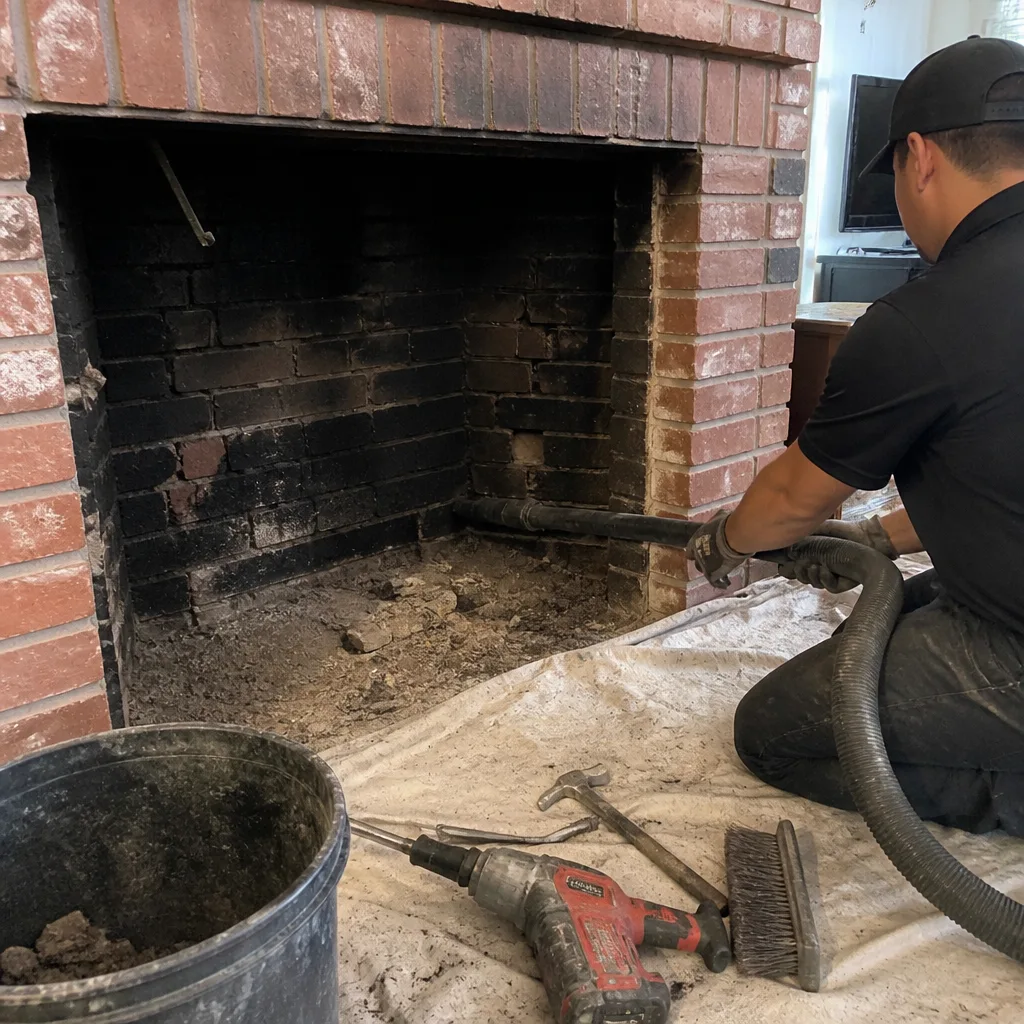 Before
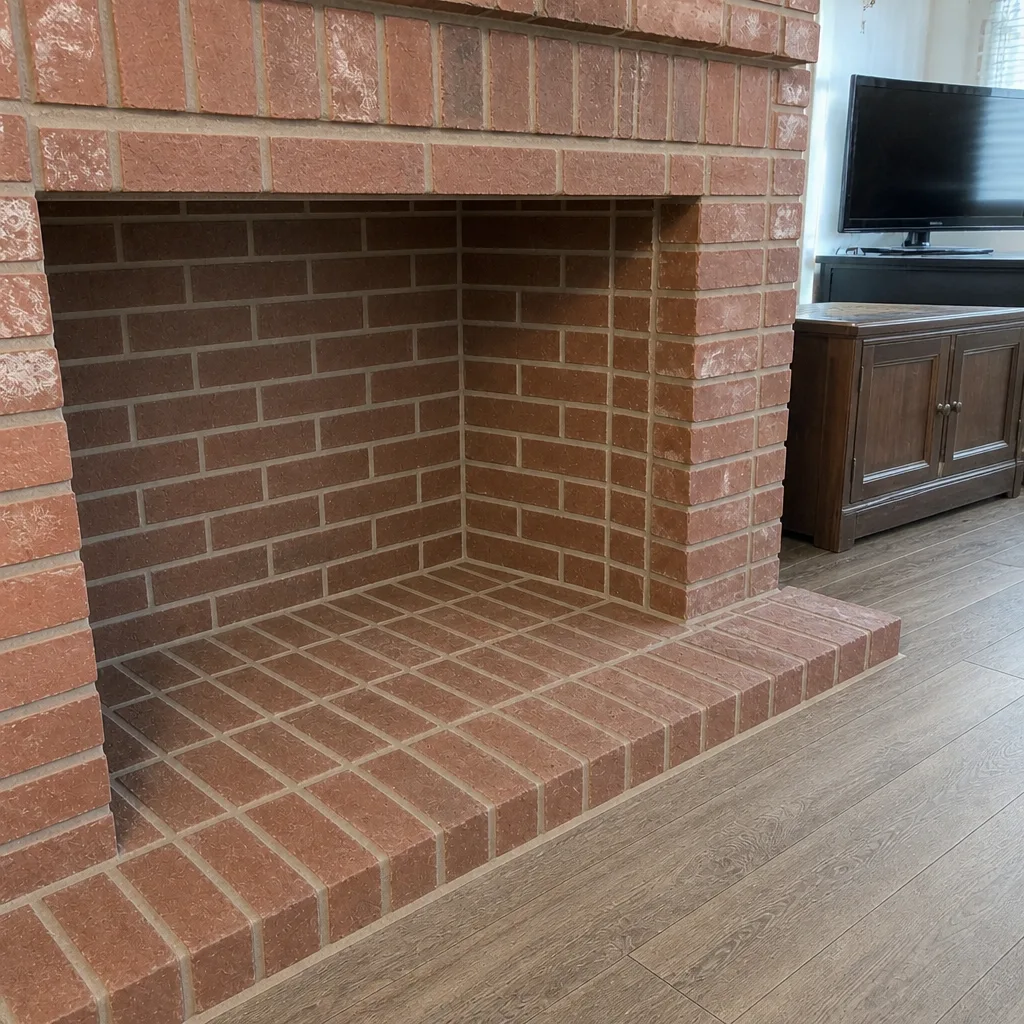 After
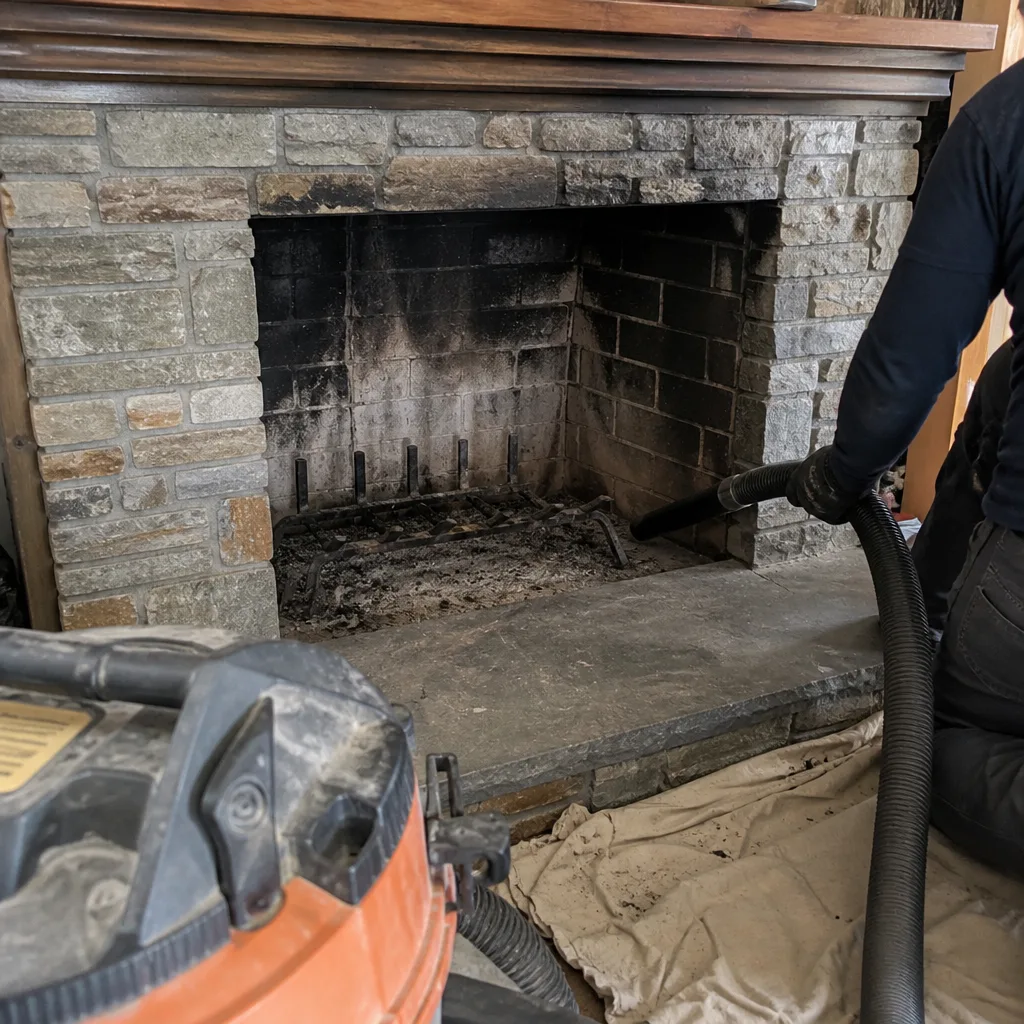 Before
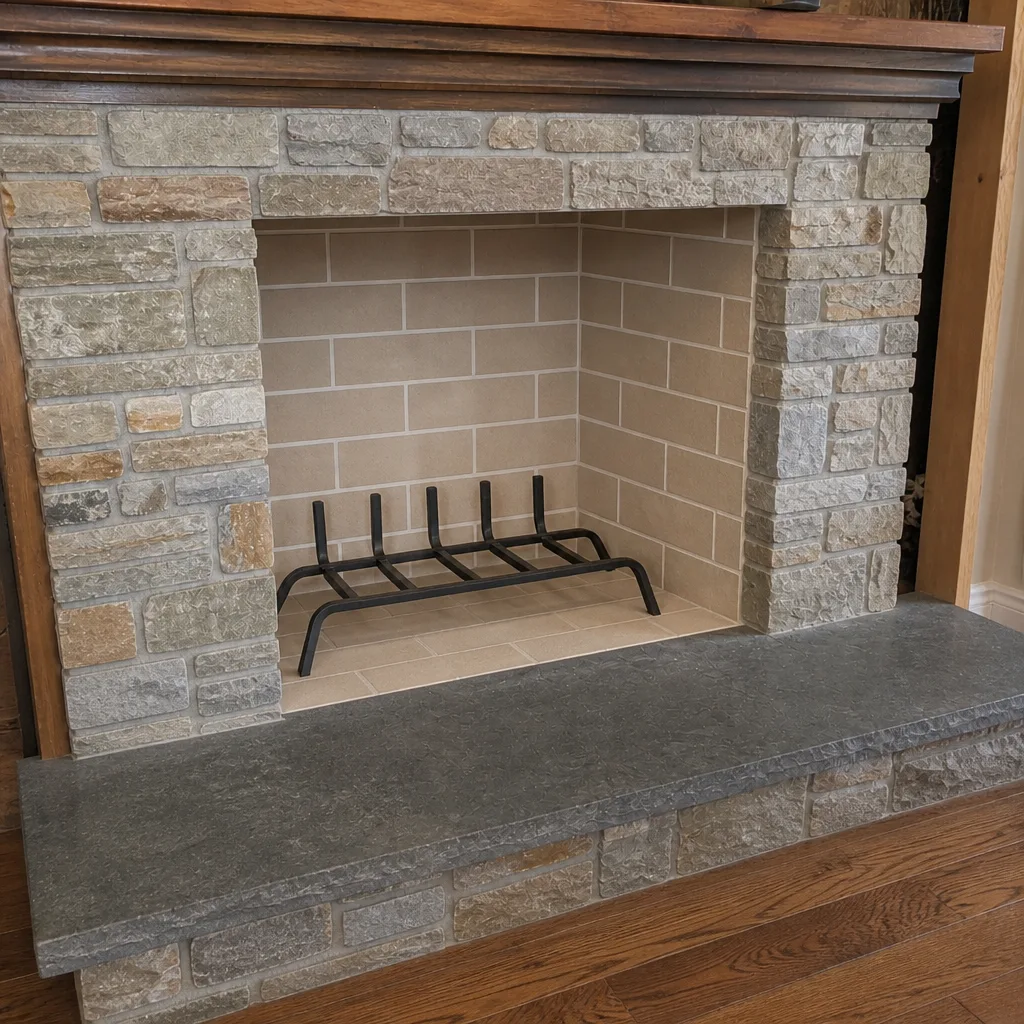 After
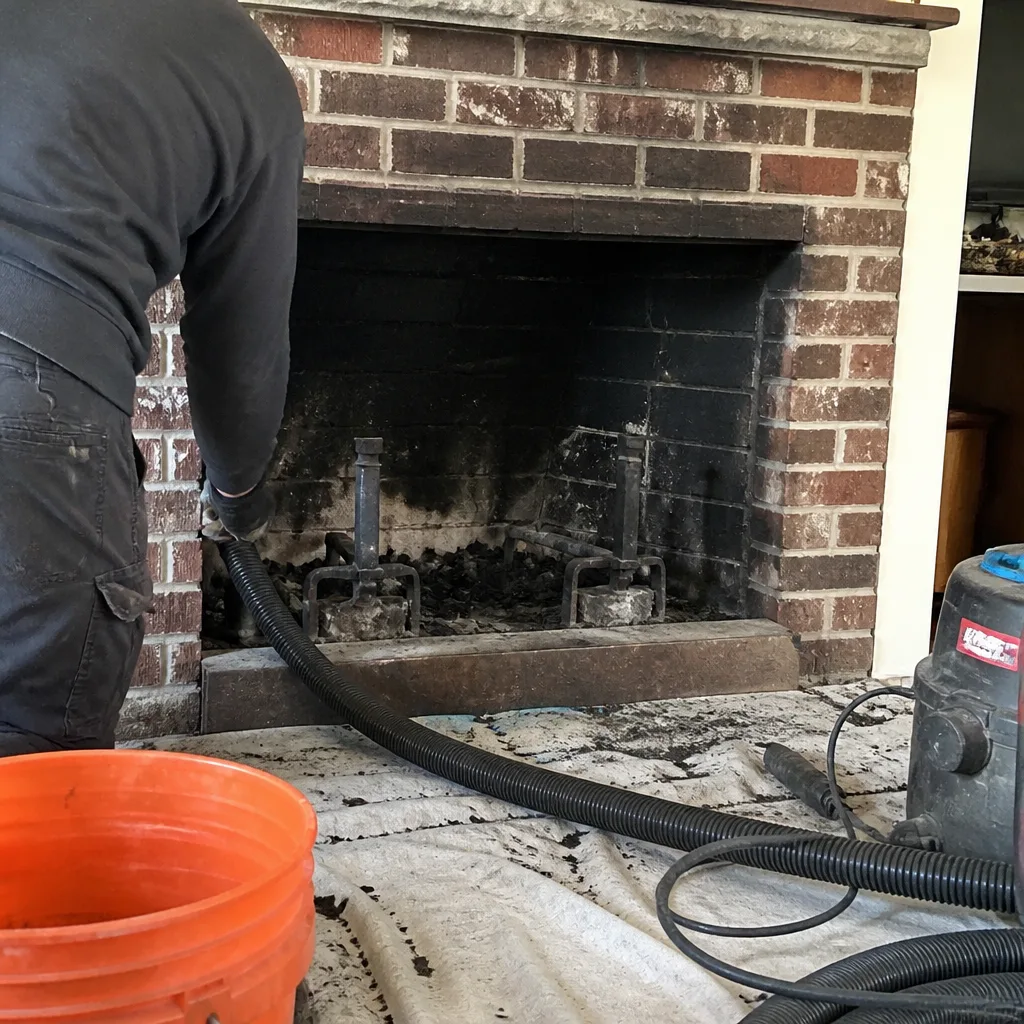 Before
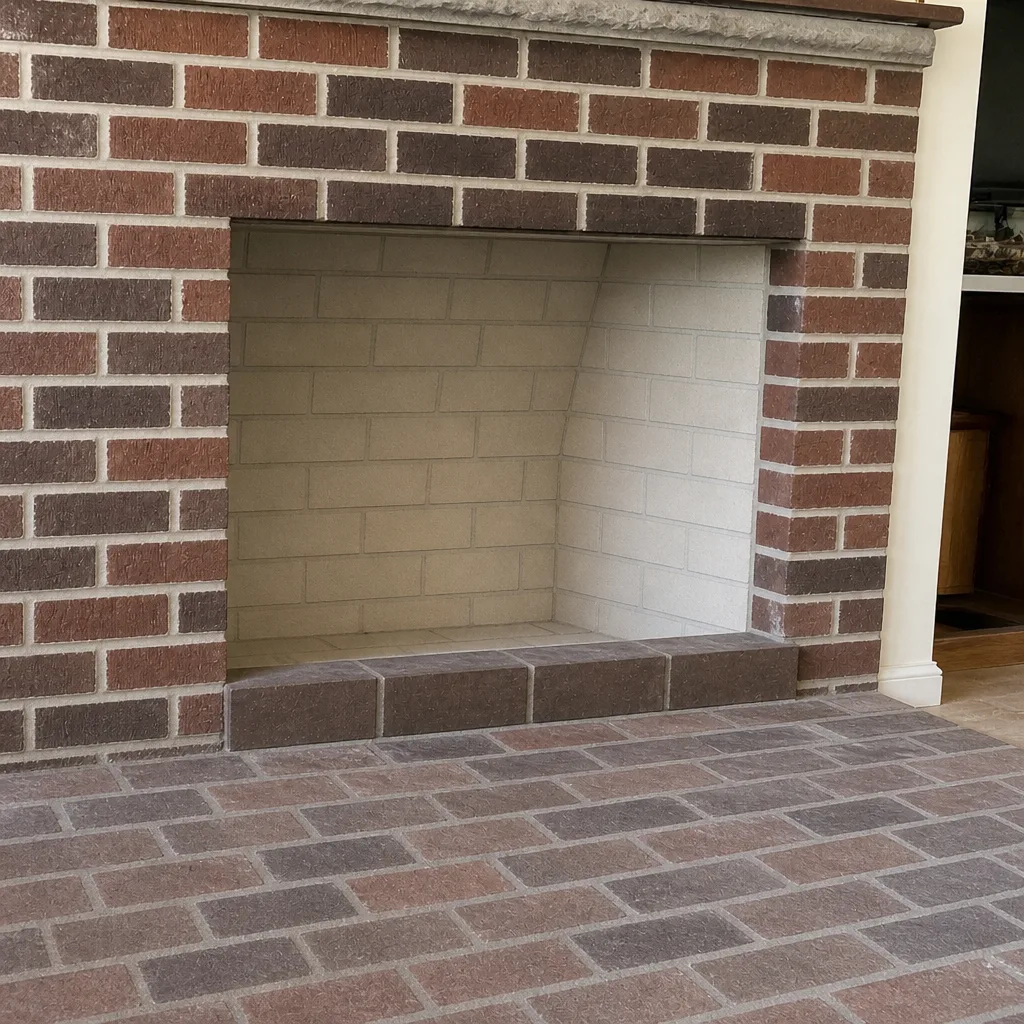 After
When to Call a Professional
Call a professional when the symptom points inside the flue, when the cap or crown has visible damage, or when you haven’t had the chimney inspected in the last year of active use. Call sooner if smoke is entering the room, if you smell creosote on warm days, or if you can see white staining or a cracked crown from the ground. Those aren’t cosmetic and they don’t fix themselves. Redmond Chimney Sweep offers free estimates in Redmond and can trace the symptom to its cause with a camera inspection before any work is recommended. Call (877) 492-1807. We answer 24/7. Fast dispatch from 7am to 7pm, Sunday through Friday. Our technicians have up to 12 years of experience on Redmond chimneys, and the inspection findings are yours to keep whether or not you book the repair.
Frequently Asked Questions
A standard chimney sweep is typically $180 to $320, and the price is set by the written estimate before any work begins. Camera inspection and a photo report are included, so you see exactly what we see. Call (877) 492-1807 for an exact quote. Estimates are free.
You need a camera inspection because liner cracks, joint gaps, interior spalling, and glazed creosote are all invisible from the firebox. A sweep alone tells us the flue is cleaner, not that it’s sound. The camera report shows you the actual failure before anything is recommended. Call (877) 492-1807 to book one.
Smoke rollback is almost always a pressure or blockage problem, not a cleaning issue. The two most common causes are negative pressure in the house, often from a bath fan or a tight envelope, and a physical obstruction in the flue. A smoke-match test near the damper and a cracked window tell you which it is within a minute. If the match draws and the window test changes nothing, the cause is inside the flue and needs a camera.
White staining is efflorescence, and while it isn’t dangerous on its own, it’s a reliable sign that water is entering the masonry. Left unaddressed, it leads to spalling brick, rusted dampers, and liner damage. The fix is usually the cap or crown. Call (877) 492-1807 and we’ll tell you which one from a photo or a visit.
No. Liner repair is genuinely a specialist job, and the flue is not a safe place to improvise. Even a small joint gap can let combustion gases into the framing, and the fix has to be done with the right materials for the flue type. We use HeatShield resurfacing for intact flues with surface damage and DuraFlex stainless systems for full relines, and the choice depends on what the camera finds. Call (877) 492-1807 for an inspection.
Once a year during active heating season is the baseline, and more often if you burn a lot of wood or notice draft problems. In Redmond, the wet climate means a yearly inspection catches cap and crown issues before they turn into liner damage. A chimney that isn’t used should still be inspected periodically. Call (877) 492-1807 to schedule.
You lose visibility into the two failure modes that matter most: a cracked liner, which lets heat reach the framing, and water intrusion through the cap or crown, which quietly destroys the masonry from the inside. Neither shows a symptom you can see from the living room until damage is well along. Skipping the inspection doesn’t cause the problem, but it delays the fix. Call (877) 492-1807 and we’ll tell you plainly when work can safely wait.
The Bottom Line
Most chimney problems aren’t mysterious. They’re specific mechanical failures, each with a symptom you can learn to read. Smoke rollback is pressure or blockage. White staining is water getting in from above. A lazy draft is a cold flue, wet wood, or an obstruction. Match the symptom to the cause before you spend a dollar, and you’ll avoid the two most common wastes: paying for a cleaning that can’t fix a repair issue, and skipping the camera inspection that would have found the real problem. In Redmond, the wet climate makes cap, crown, and liner failures more likely than in drier places, so those are the first things to check. When in doubt, get the diagnosis. Redmond Chimney Sweep is one company for the whole system: sweep, inspect, repair, and restore, working with the product lines the trade relies on, including DuraFlex, HeatShield, Copperfield, and Famco. Call (877) 492-1807 for a free estimate. We answer 24/7. Fast dispatch from 7am to 7pm, Sunday through Friday.
Written by the team at Redmond Chimney Sweep.